01
If you don't like it, you get your money back
An AI agent for reconciliation,that knows which customer each payment is from.
It reads the bank feed every day, matches each ACH or wire deposit to its invoice and applies what matches. Whatever doesn't match is flagged with the reason so a person can resolve it.
Free demoYou own the codeBuilt around your business
What happens today at most companies that get paid by bank transfer. The money comes in; finding out whose it is takes hours.
- 01
Money lands in the bank and nobody knows which customer it's from.
- 02
The customer's accounts payable team paid from a different account and left off the invoice number.
- 03
A customer pays three invoices in one payment, or one invoice in two parts, and someone has to guess which.
- 04
The accounting team spends hours matching the bank statement against open invoices, one by one.
- 05
A customer who already paid gets a past-due notice because the payment was never applied.
- 06
Until everything is reconciled, nobody knows for sure how much has been collected or how much is still owed.
What the agent does. Each piece answers one of those problems, with your company's data.
02
Matches each payment to its invoice. It finds the invoice or group of invoices that matches by customer, amount and date, even when someone else paid or the payment came in several parts.
03
Applies what matches on its own. When the match is clear, it records the payment in your accounting system, such as QuickBooks or Xero, and the customer's account is up to date.
04
Flags what doesn't match, with the reason. Payments that can't find their invoice go on a short list, each with the reason and the candidate invoices, so they can be resolved in minutes.
Projects we built
See the portfolio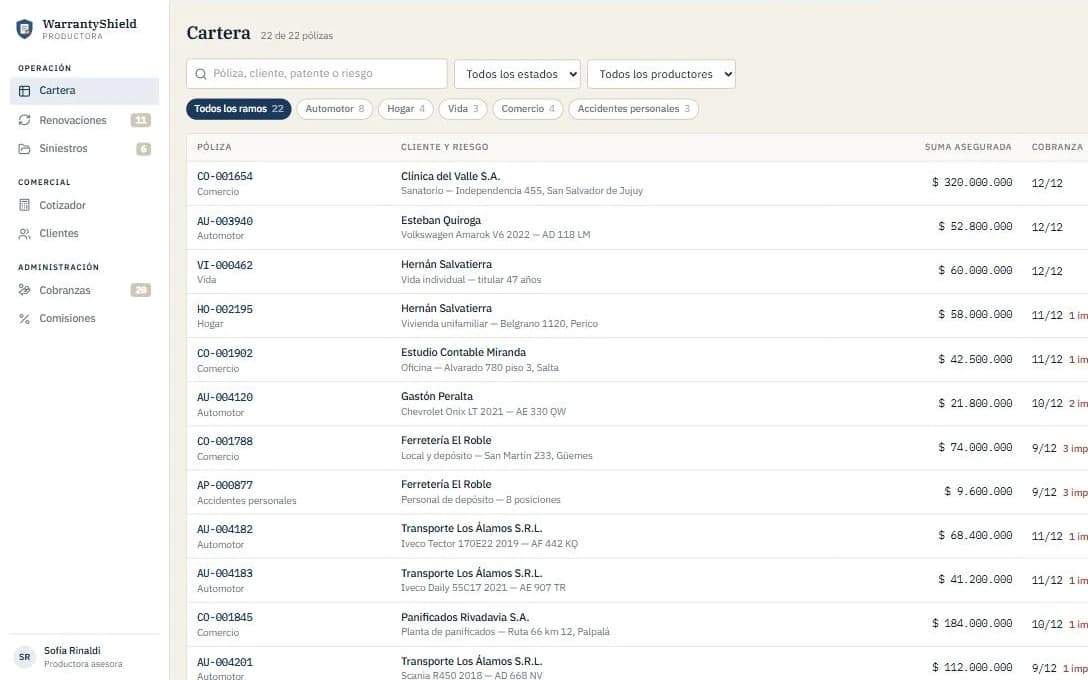 DemoWarrantyShieldSeguros
Cartera de pólizas, siniestros y renovaciones
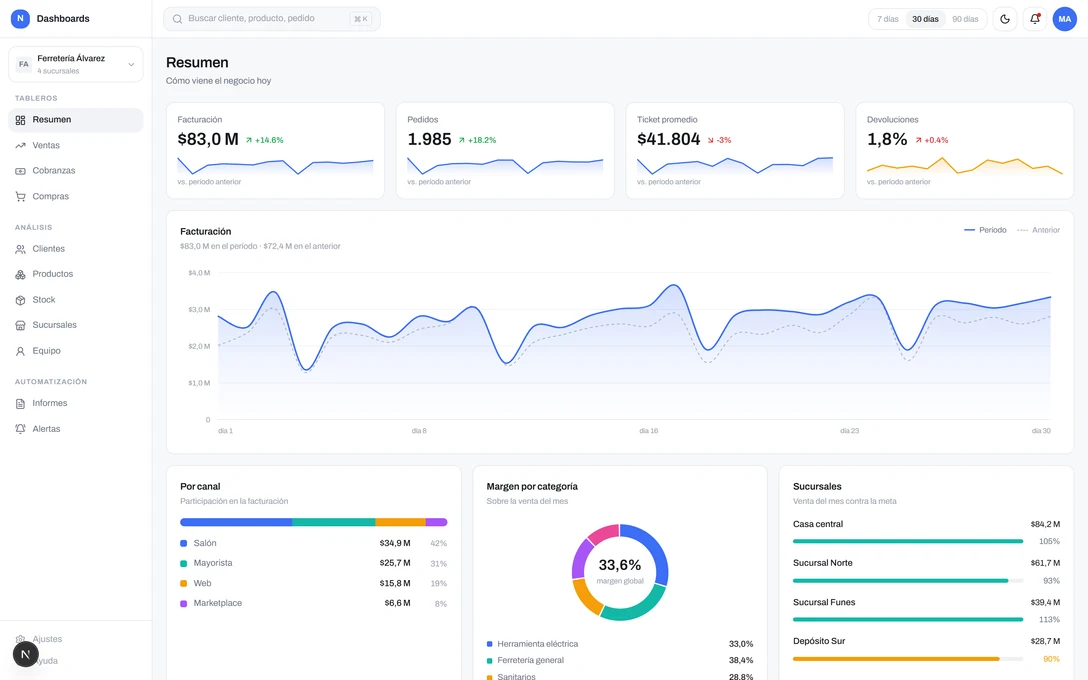 DemoDashboardsSaaS · Analítica
Tableros sobre los datos que la empresa ya tiene
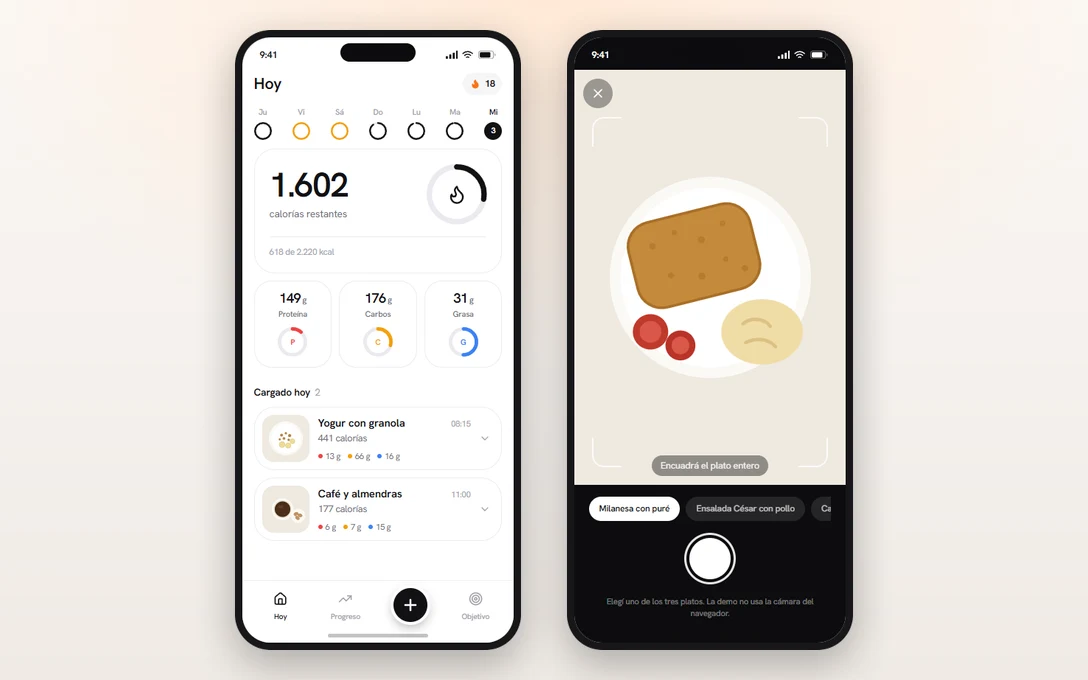 DemoMacroSnapApp mobile · Fitness
Contar calorías con una foto del plato
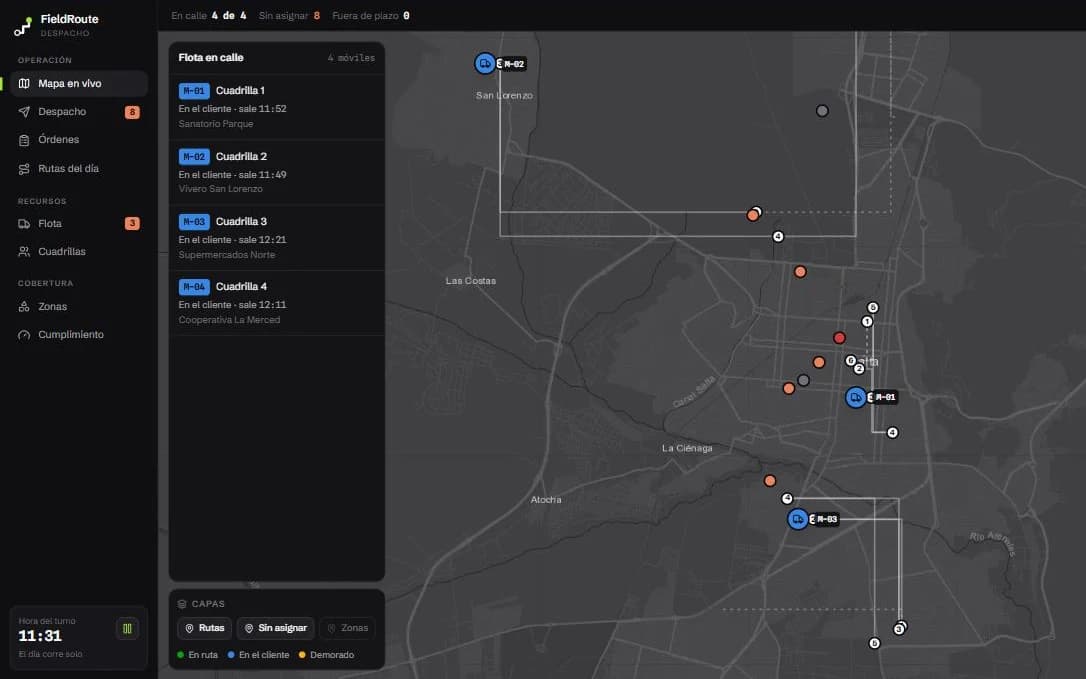 DemoFieldRouteLogística
Despacho de cuadrillas y flota sobre el mapa
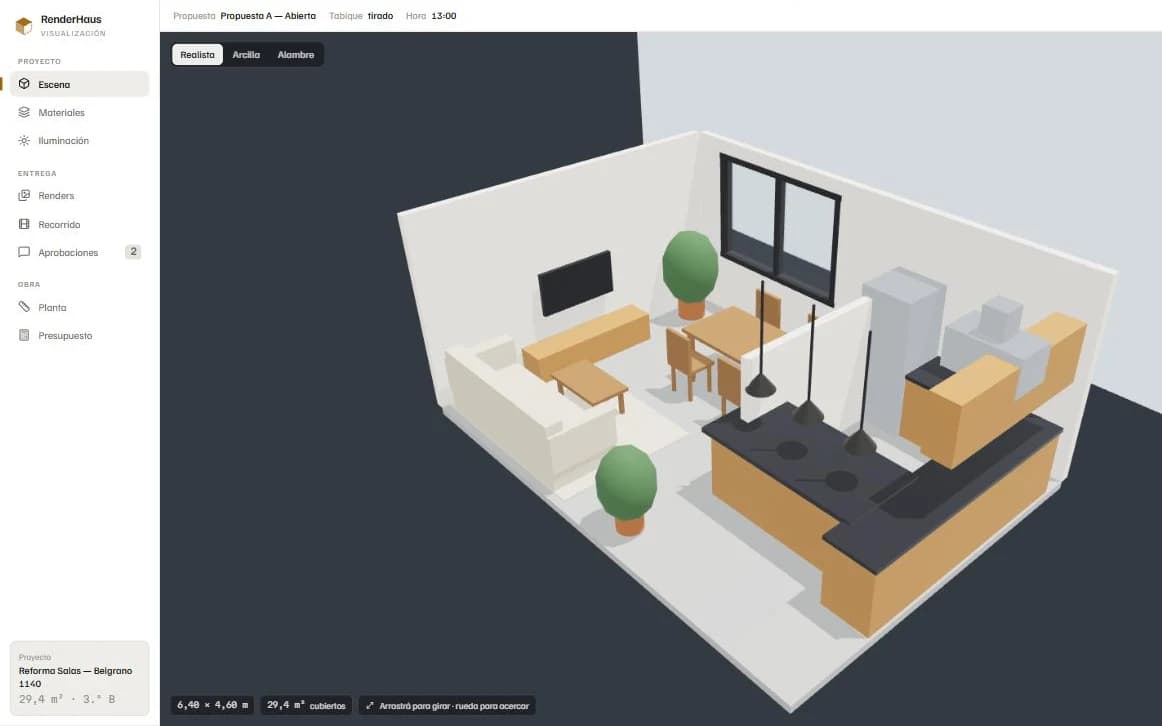 DemoRenderHausVisualización
El ambiente en 3D antes de romper la pared
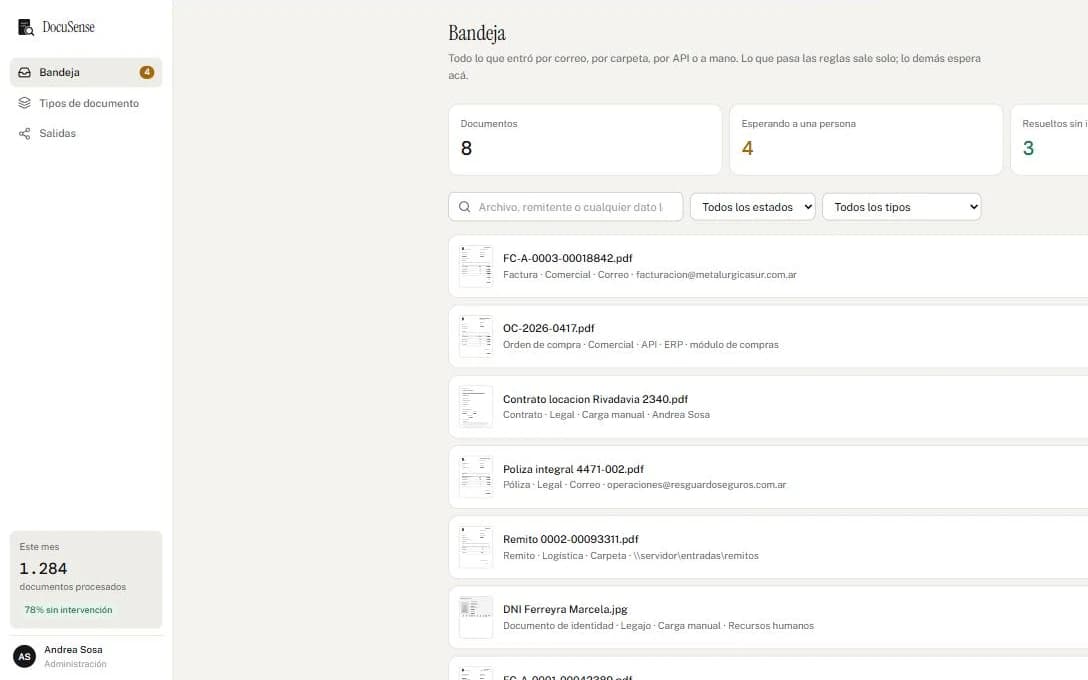 DemoDocuSenseSaaS · Documentos
Leer, validar y aprobar documentos sin cargarlos a mano
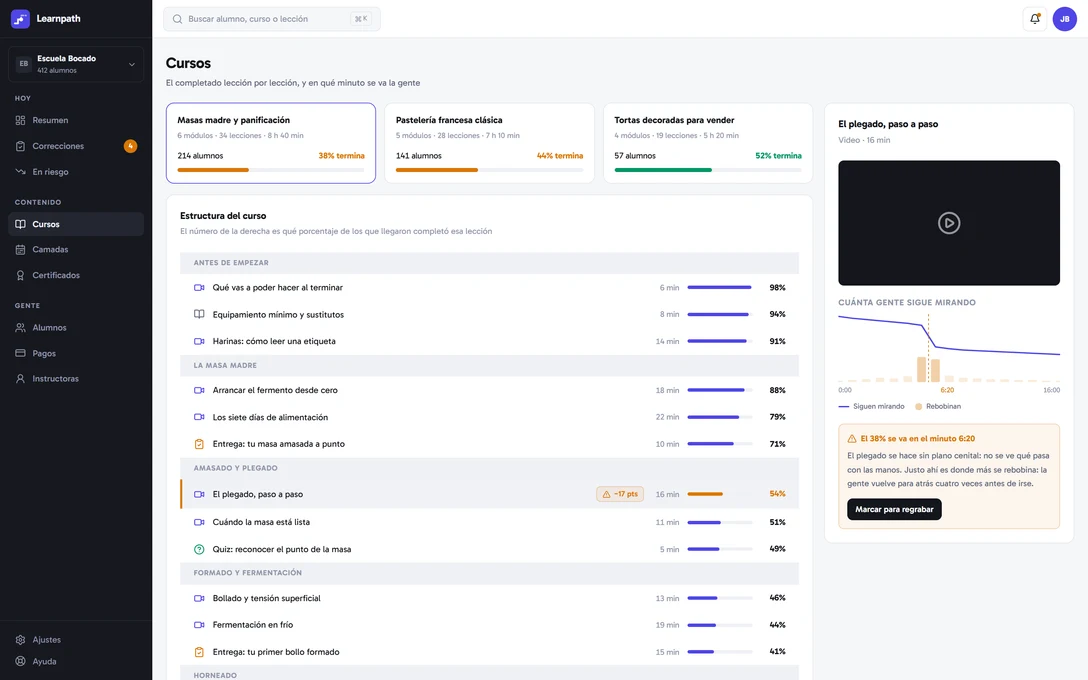 DemoLearnpathEducación · Academia online
La plataforma de una academia que vive de que terminen
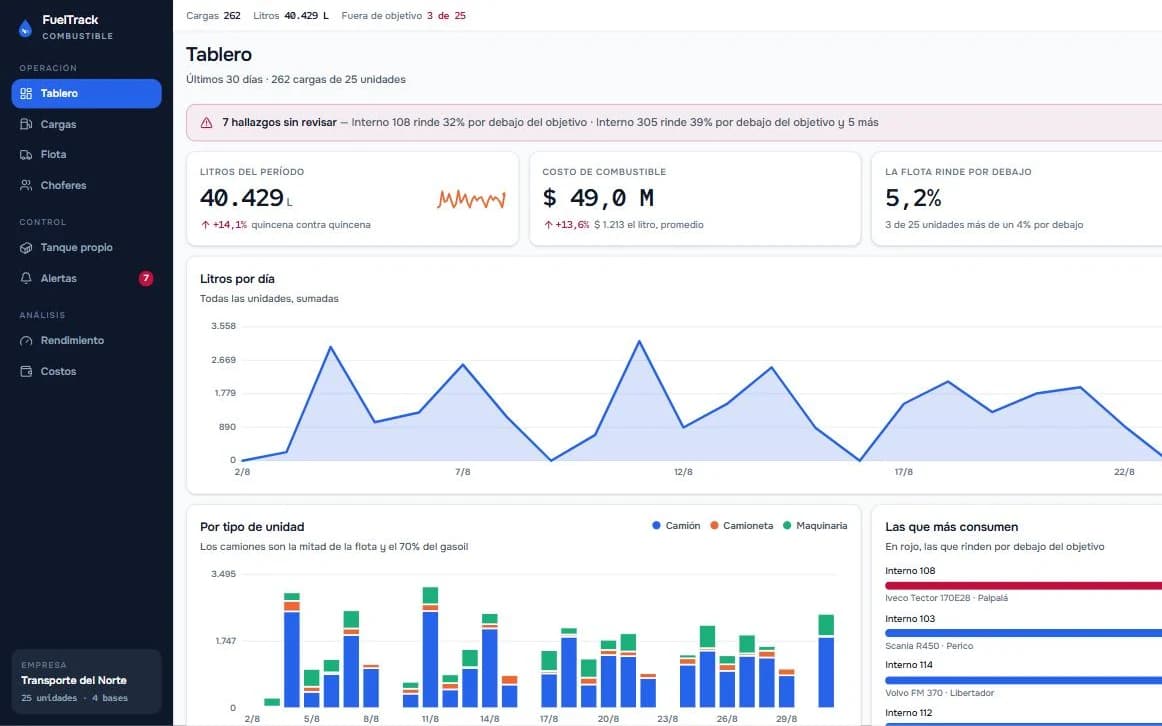 DemoFuelTrackFlotas
Control de combustible de una flota
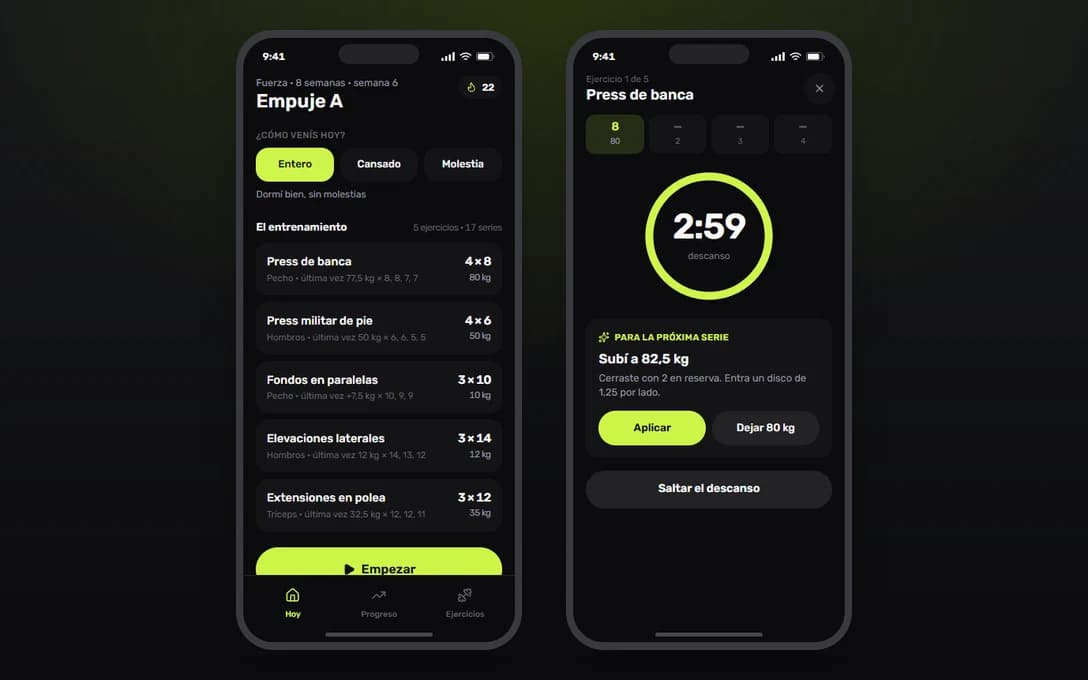 DemoRepCoachApp mobile · Fitness
El entrenador que decide la carga de la próxima serie
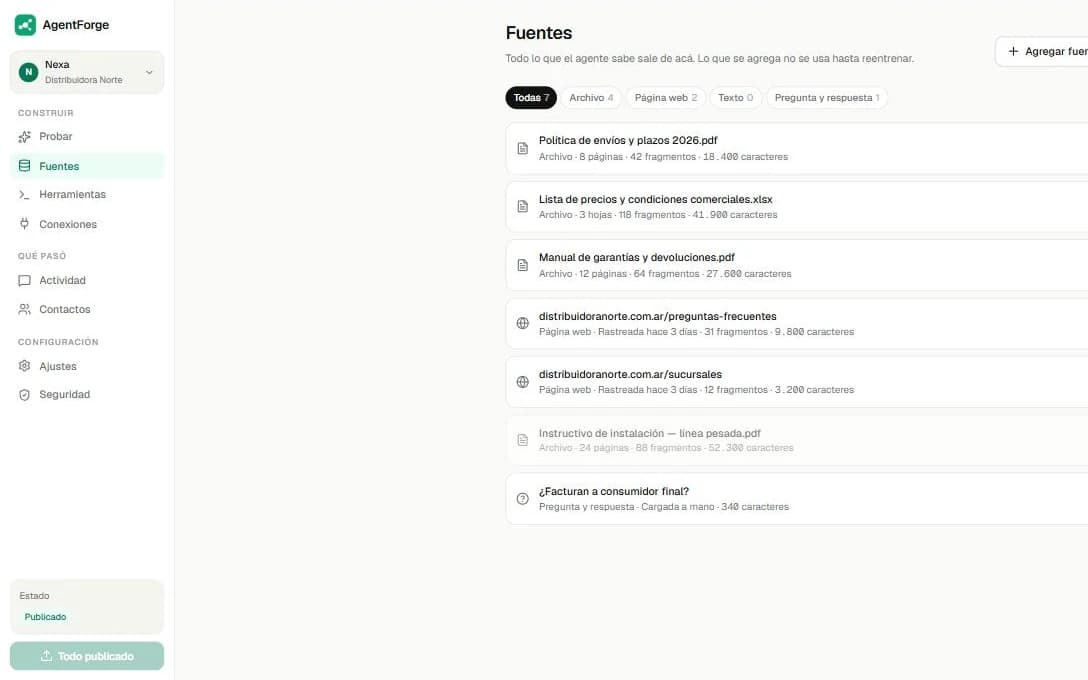 DemoAgentForgeSaaS · Agentes de IA
Armar un agente sobre documentación propia y conectarlo
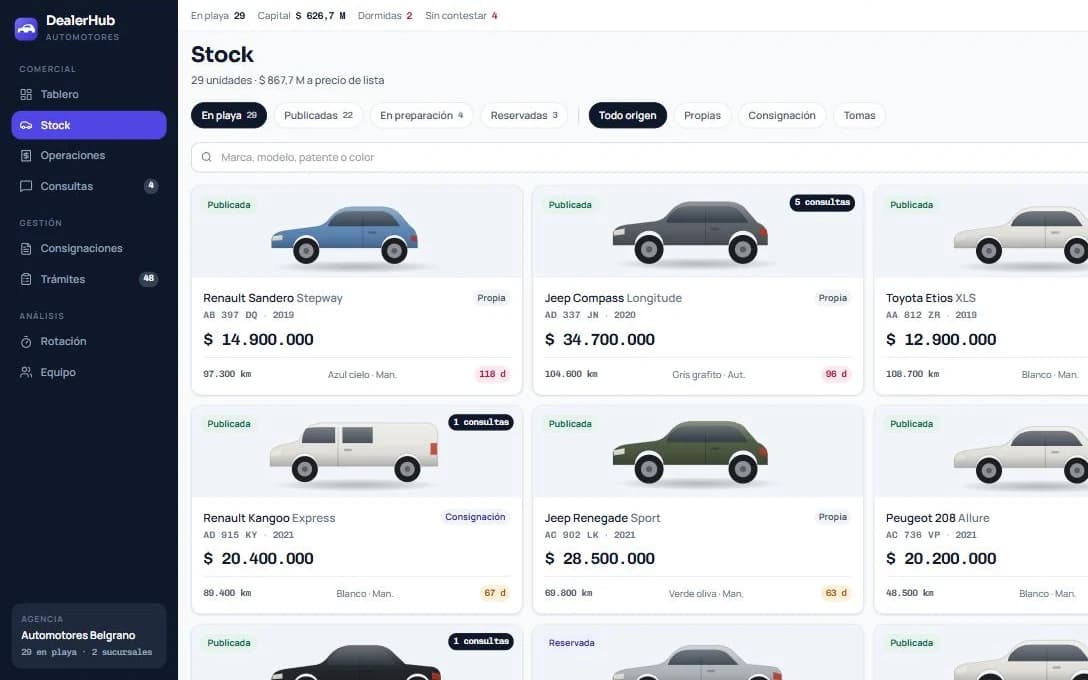 DemoDealerHubAutomotor
Stock, consignación y ventas de una agencia
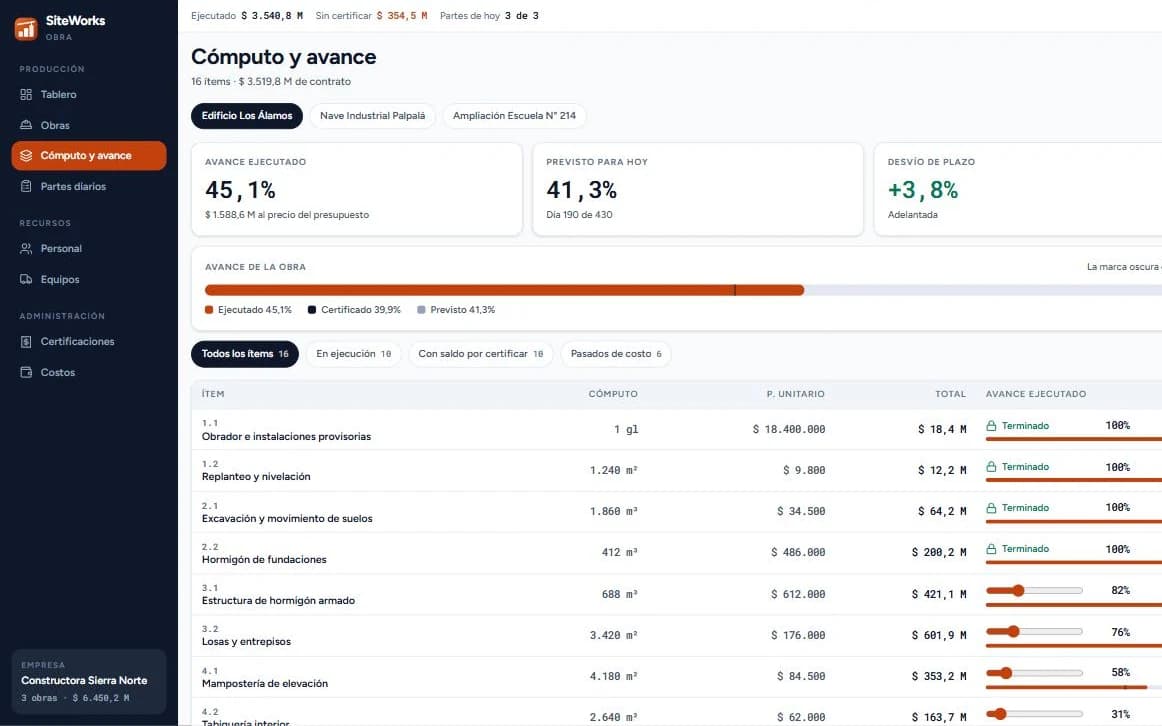 DemoSiteWorksConstrucción
Avance de obra, certificaciones y costos
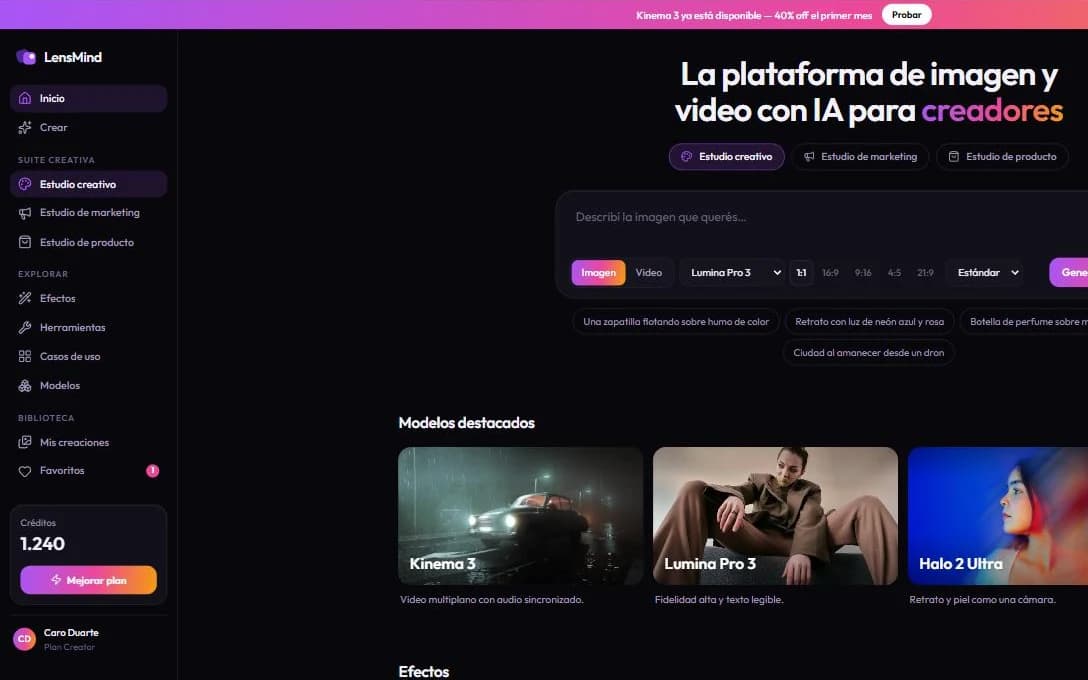 DemoLensMindSaaS · IA generativa
Generación de imagen y video con IA
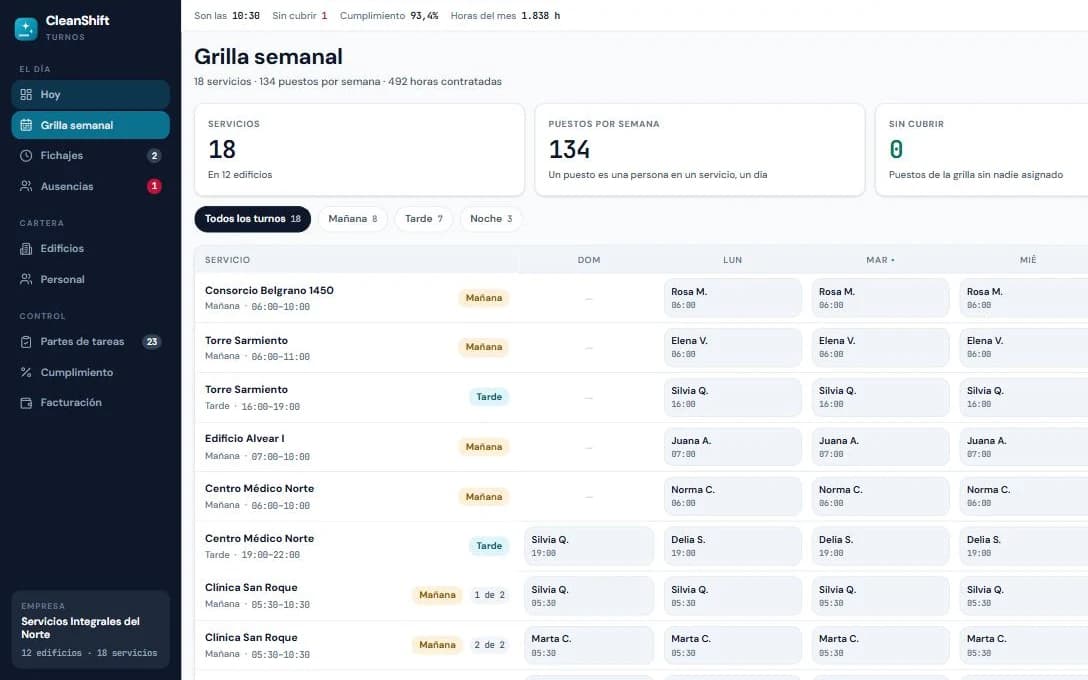 DemoCleanShiftServicios
Personal, rondas y partes de limpieza
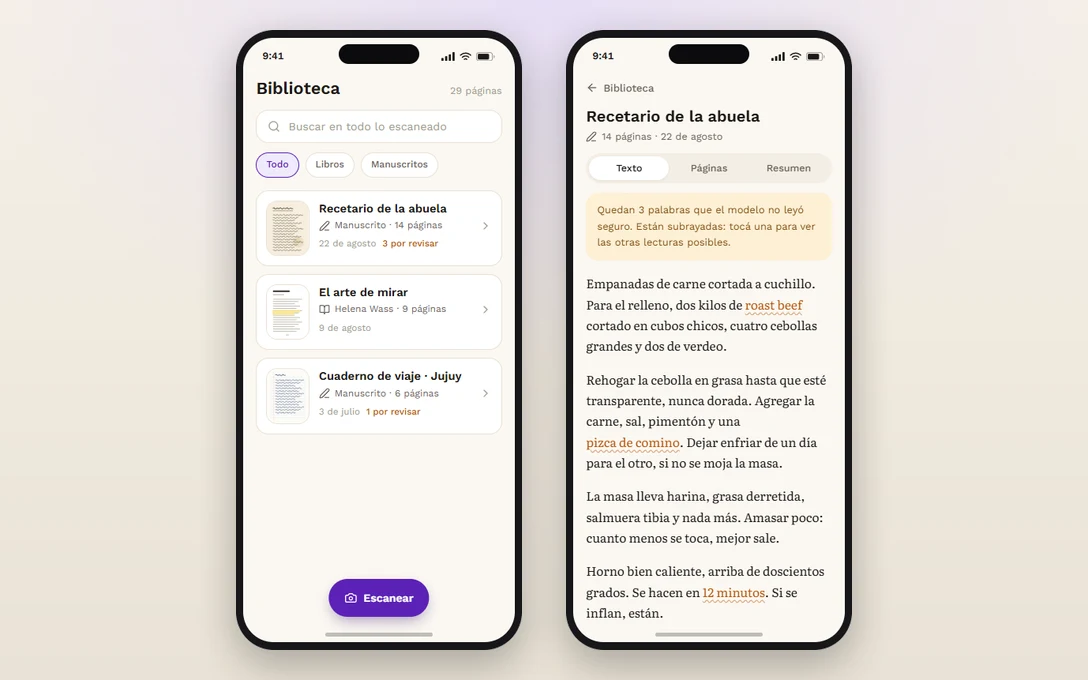 DemoPageKeeperApp mobile · Documentos
Digitalizar libros y cuadernos escritos a mano
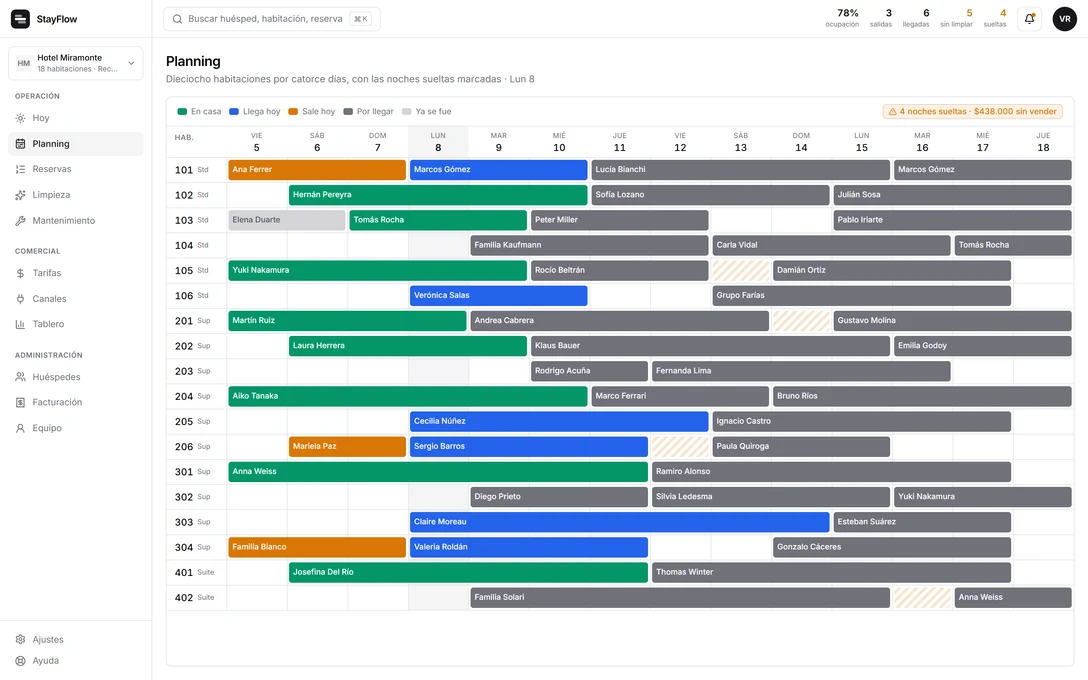 DemoStayFlowHotelería
El planning de un hotel, con las noches sueltas marcadas
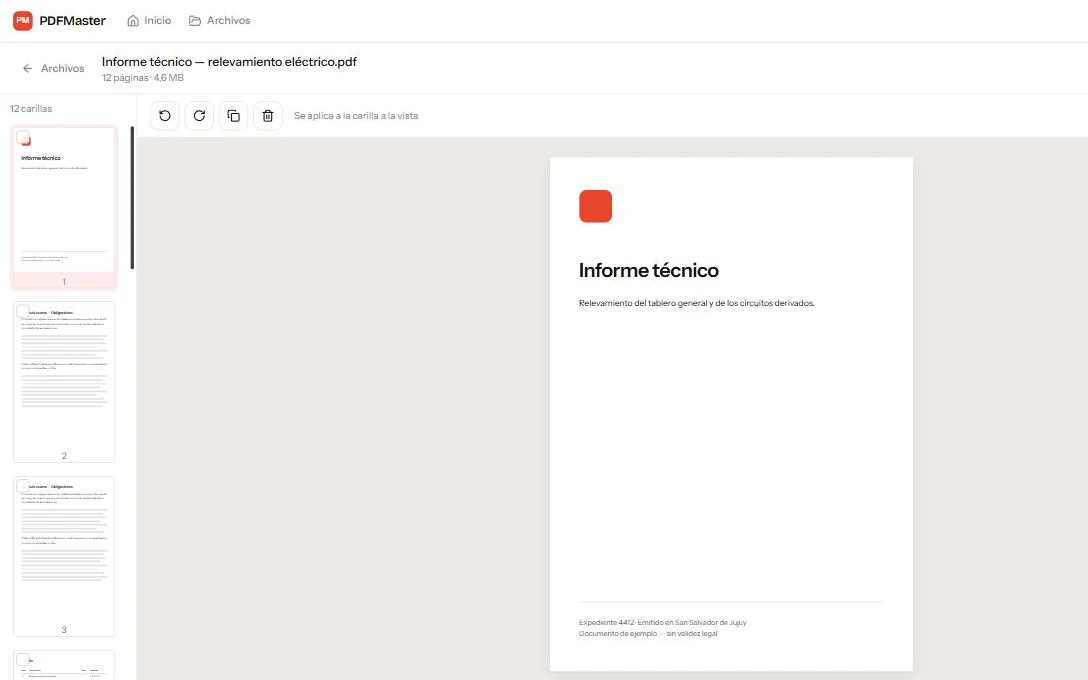 DemoPDFMasterSaaS · Documentos
Editar, combinar y firmar PDF sin instalar nada
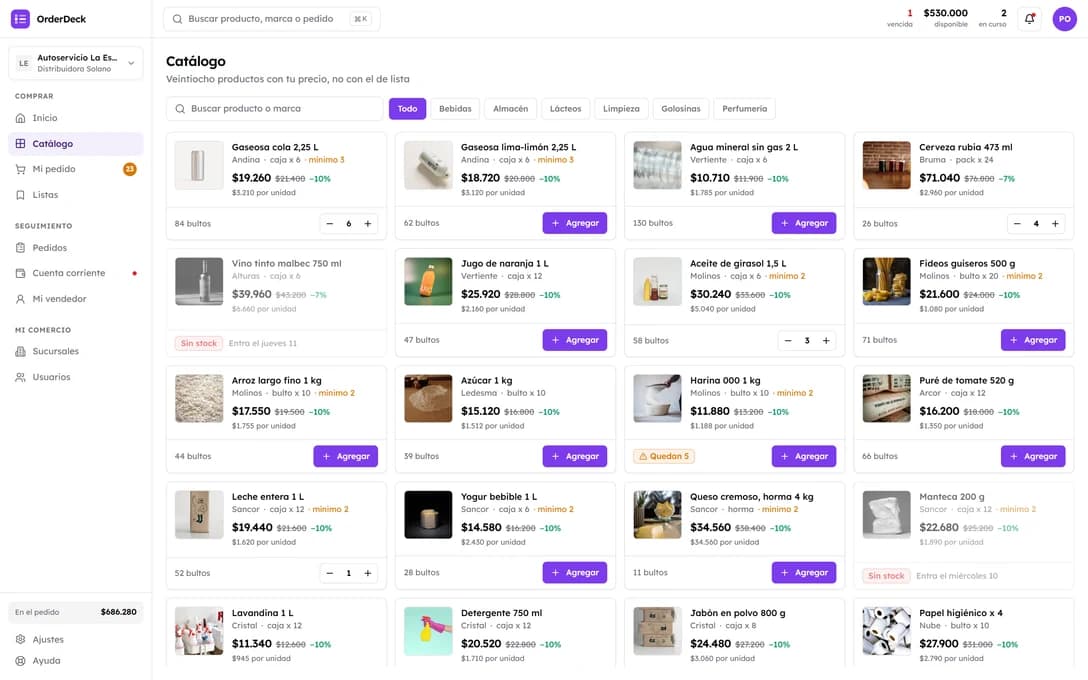 DemoOrderDeckDistribución mayorista
El portal donde el comercio se arma el pedido solo
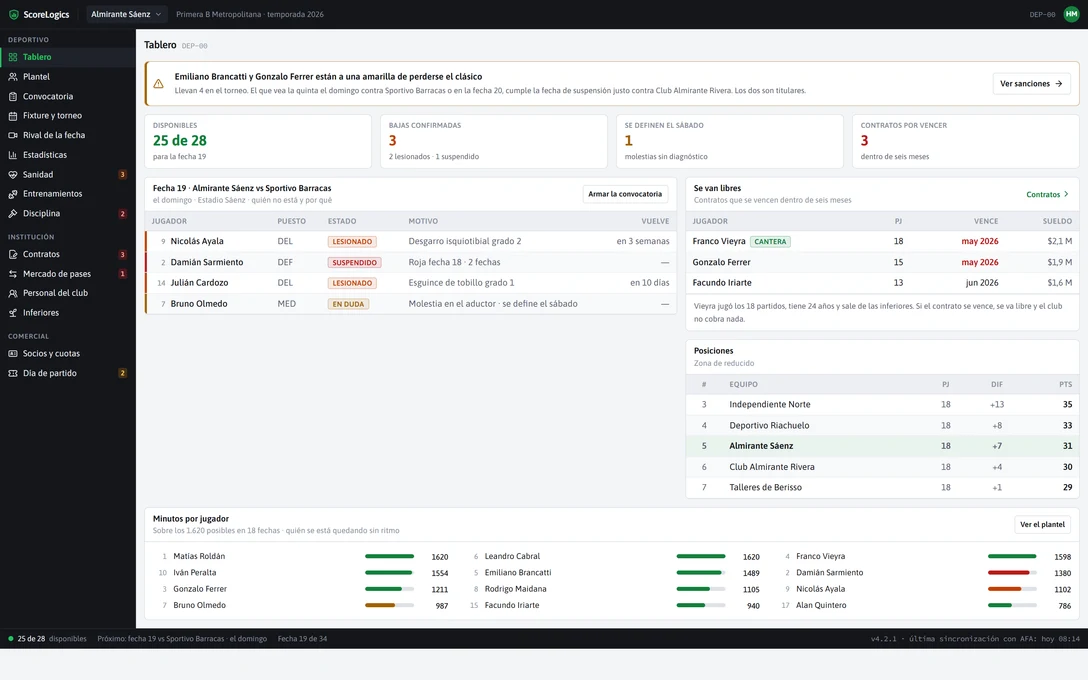 DemoScoreLogicsClubes deportivos
El ERP de un club de ascenso, donde el dato es quién puede jugar
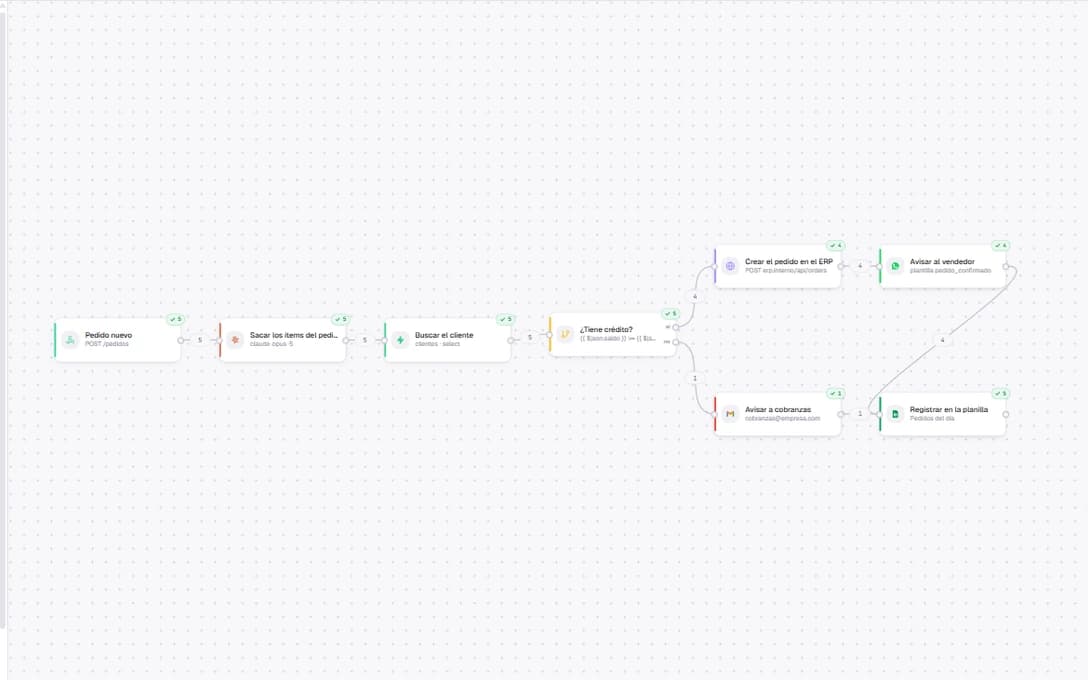 DemoFlowbenchSaaS · Automatización
Automatizaciones armadas con nodos, sin escribir código
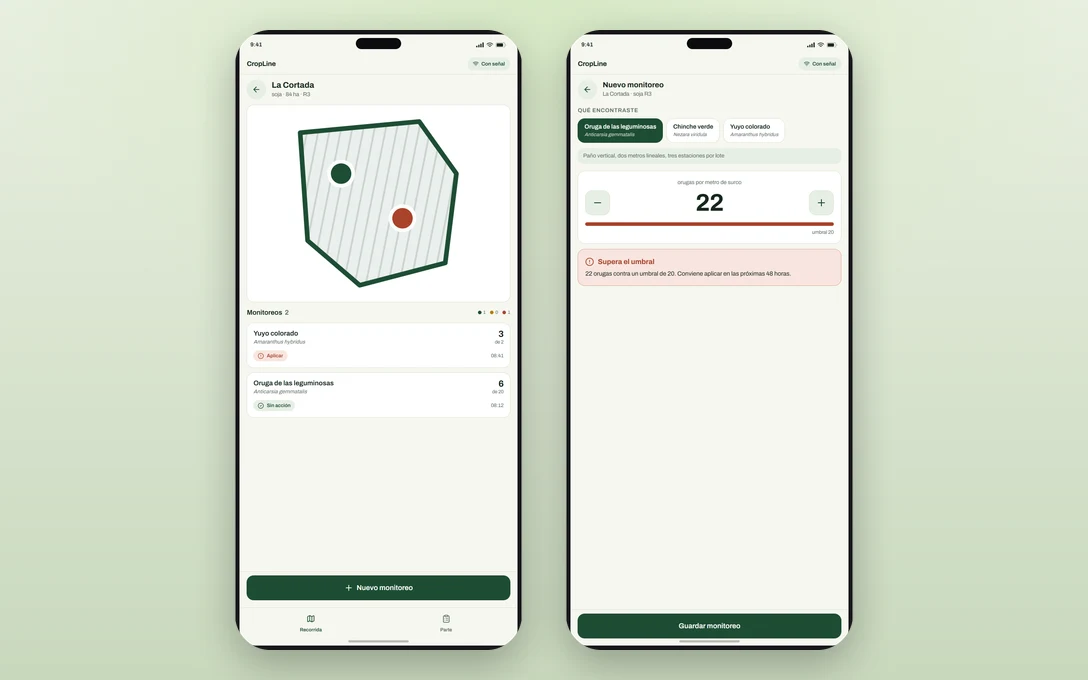 DemoCropLineApp mobile · Agro
Monitoreo de lotes que decide si hay que aplicar
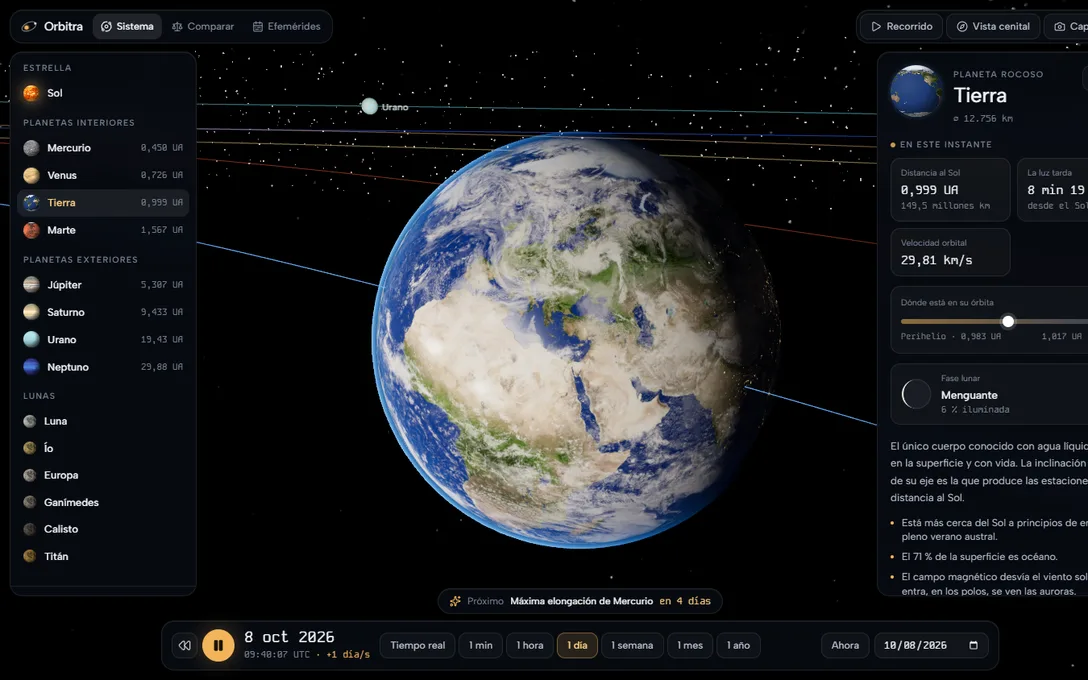 DemoOrbitraEducación · Astronomía
El sistema solar en 3D, con los planetas donde están ese día
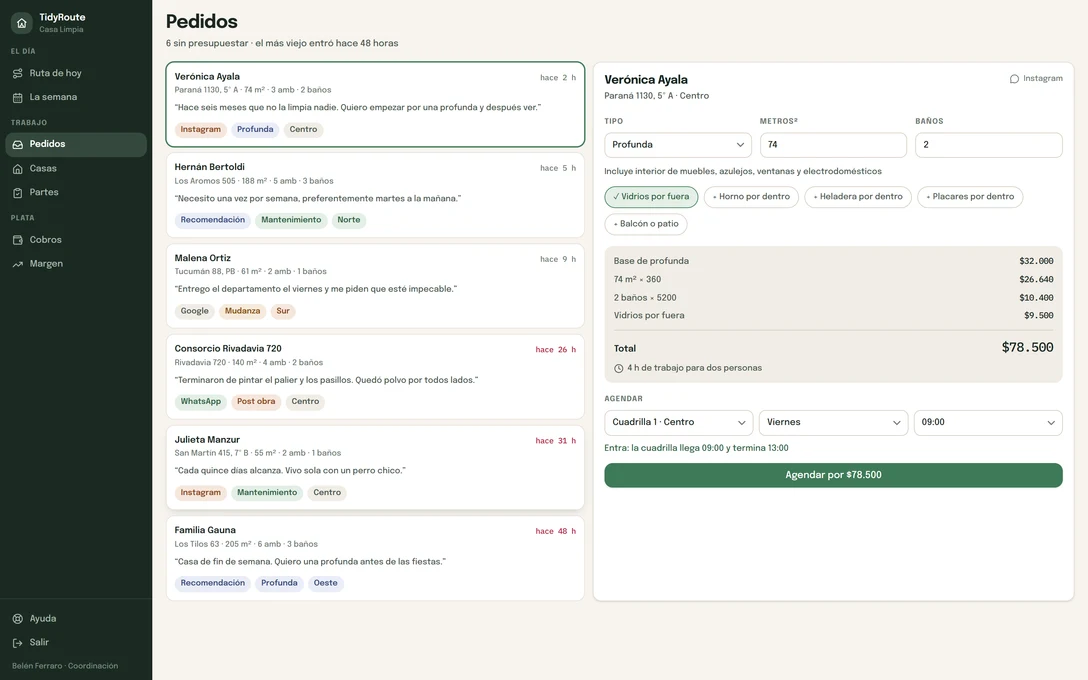 DemoTidyRouteServicios a domicilio
Limpieza de casas: presupuesto, ruta del día y margen por visita
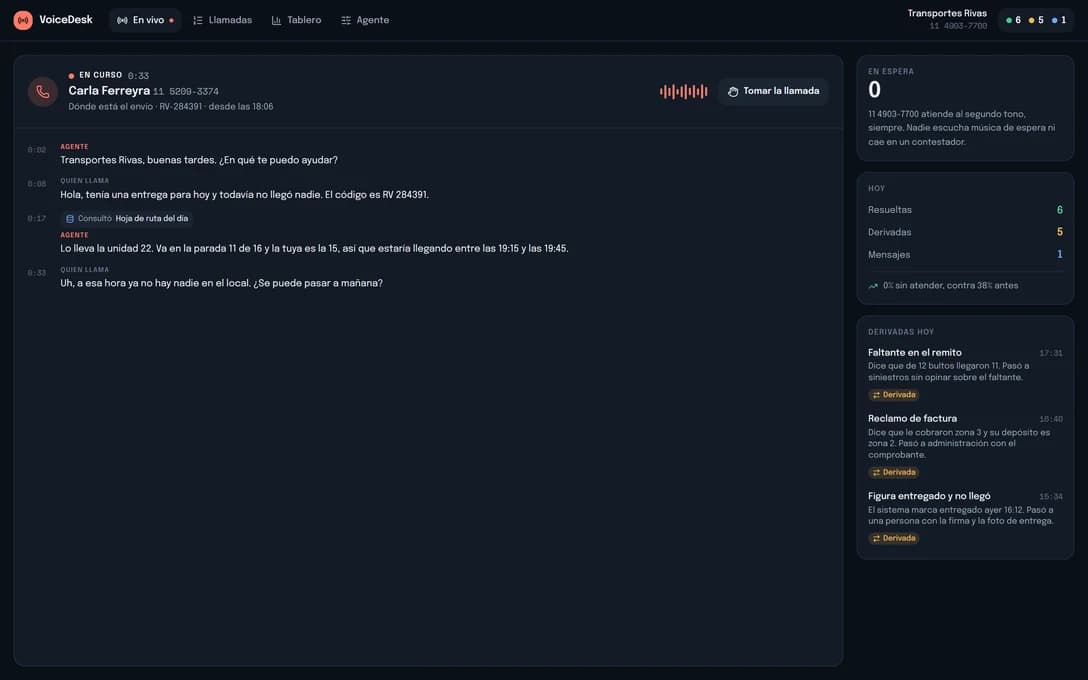 DemoVoiceDeskSaaS · Atención telefónica
Un agente que atiende el teléfono y sabe cuándo no contestar
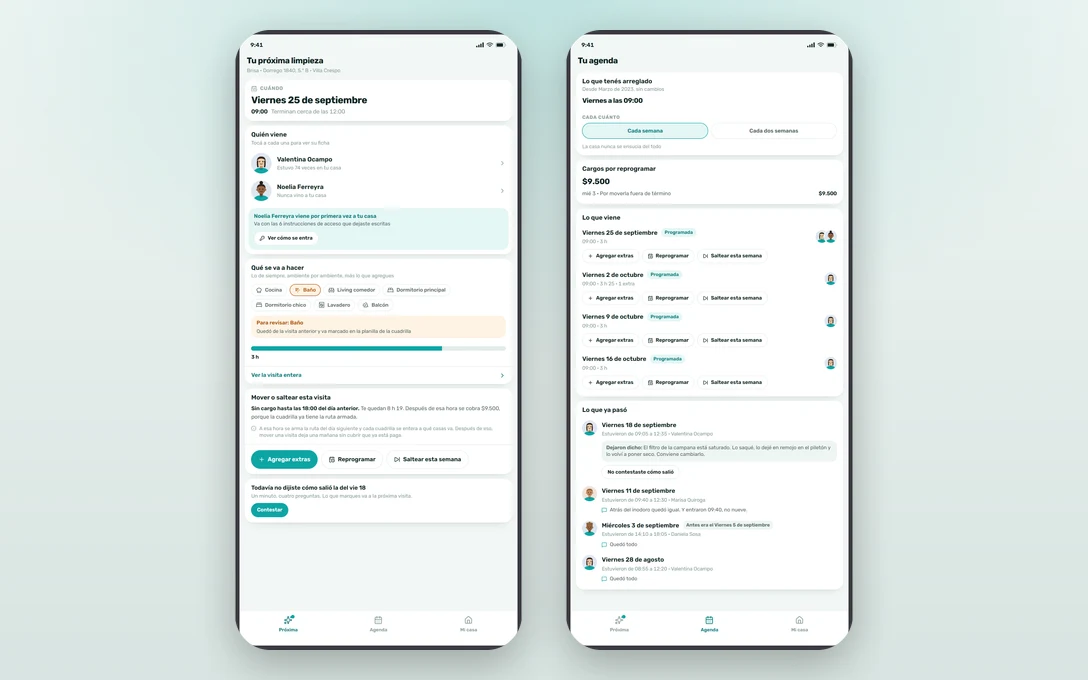 DemoFreshenServicios a domicilio
La limpieza de tu casa, reservada y repetida sin llamar a nadie
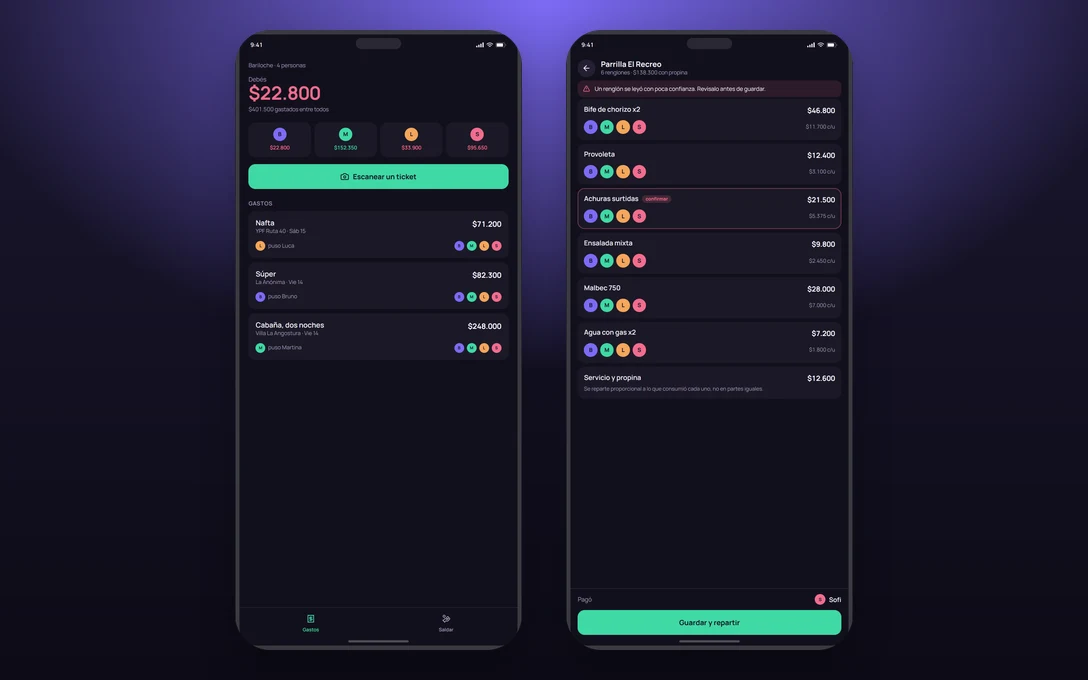 DemoSpendopeApp mobile · Finanzas
Gastos compartidos repartidos por ítem, no por cabeza
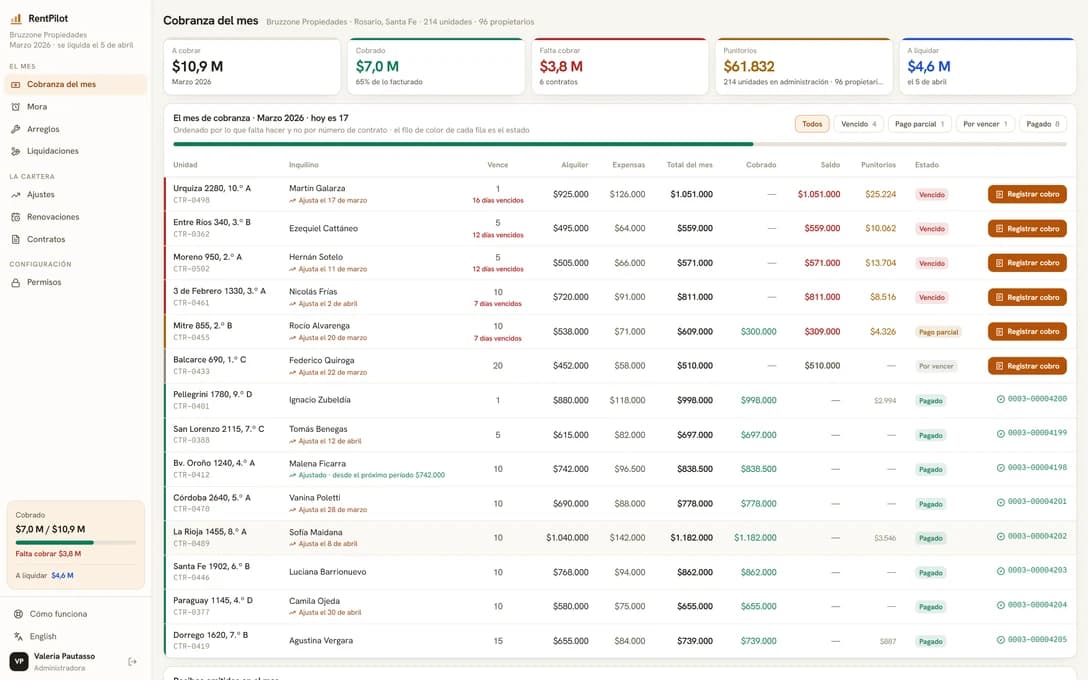 DemoRentPilotInmobiliaria
Alquileres: lo que entra, lo que se ajusta y lo que se le liquida al dueño
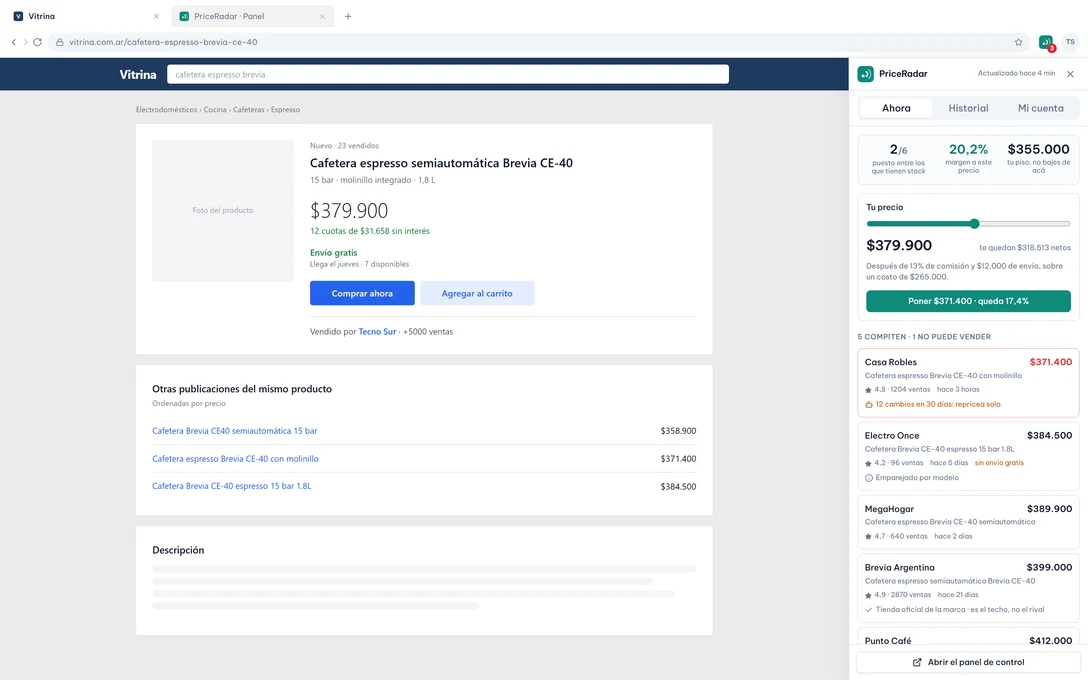 DemoPriceRadarSaaS · Venta online
La extensión que dice hasta dónde se puede bajar el precio
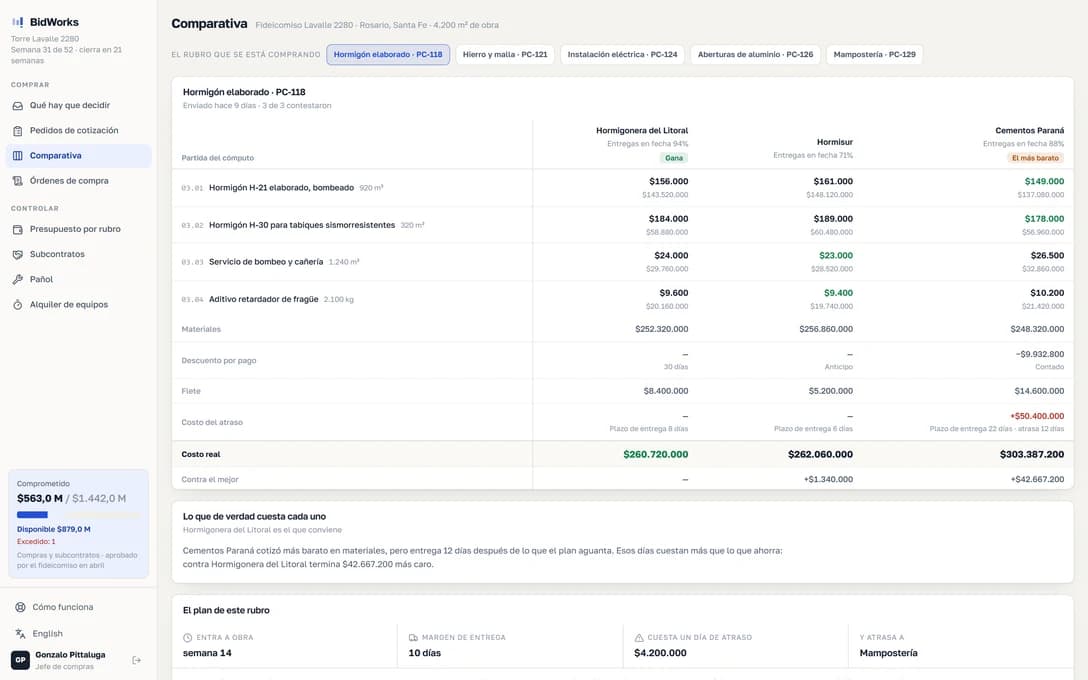 DemoBidWorksConstrucción
Comprar y contratar una obra: cotizaciones, órdenes, subcontratos y pañol
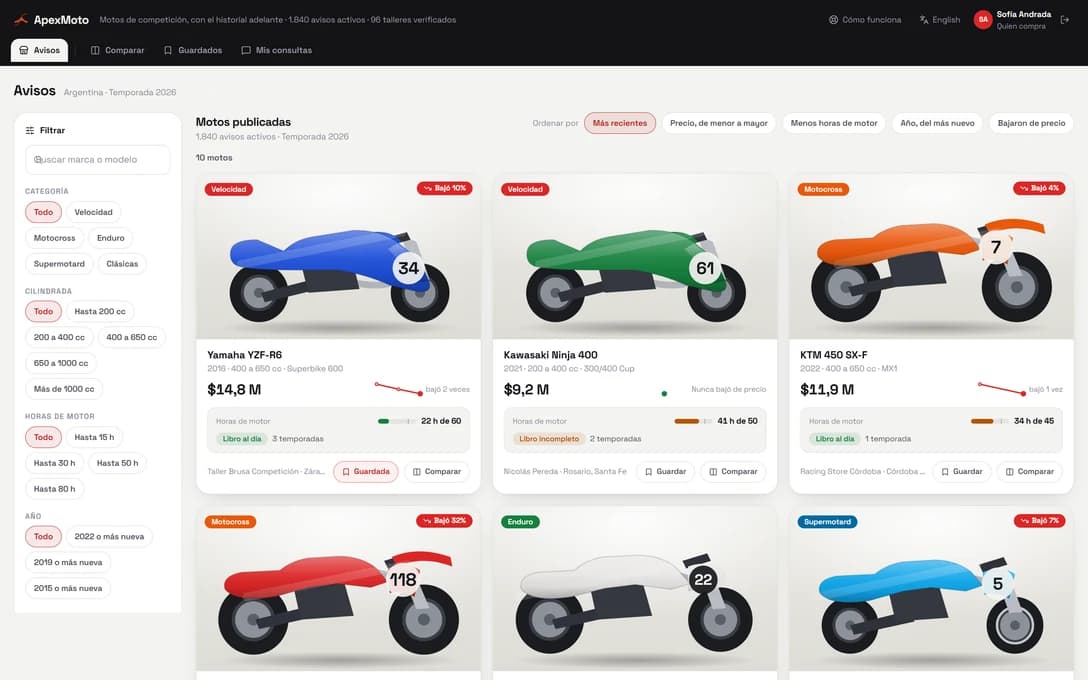 DemoApexMotoMarketplace
Motos de competición, donde el precio lo define el historial y no el año
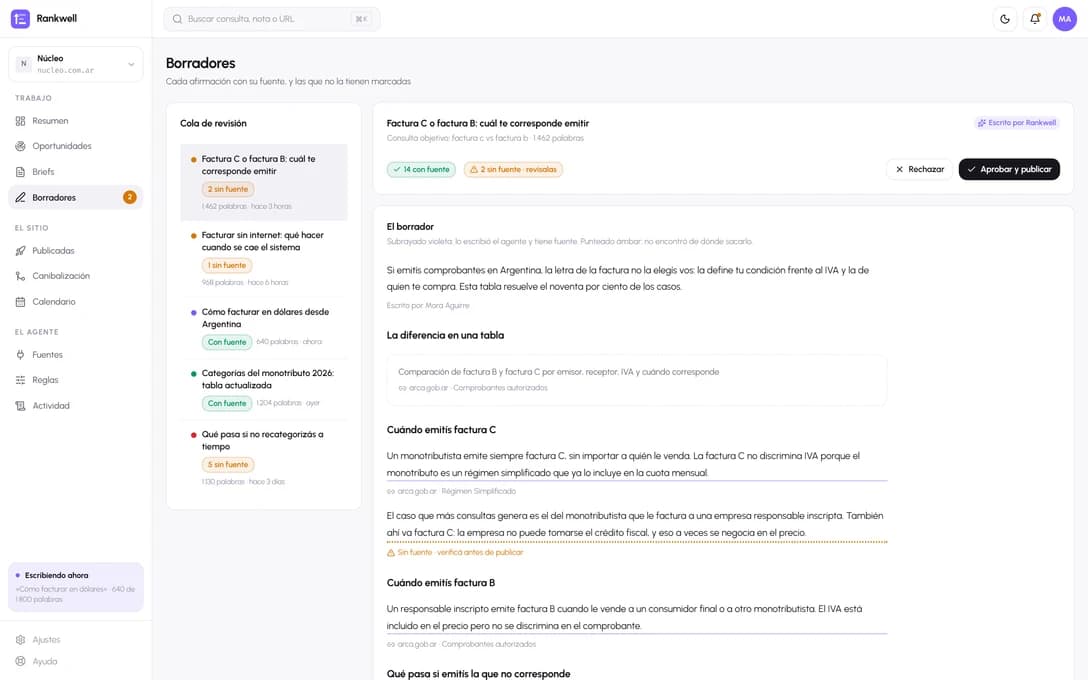 DemoRankwellSaaS · Contenido y SEO
El agente que escribe el blog y no lo publica
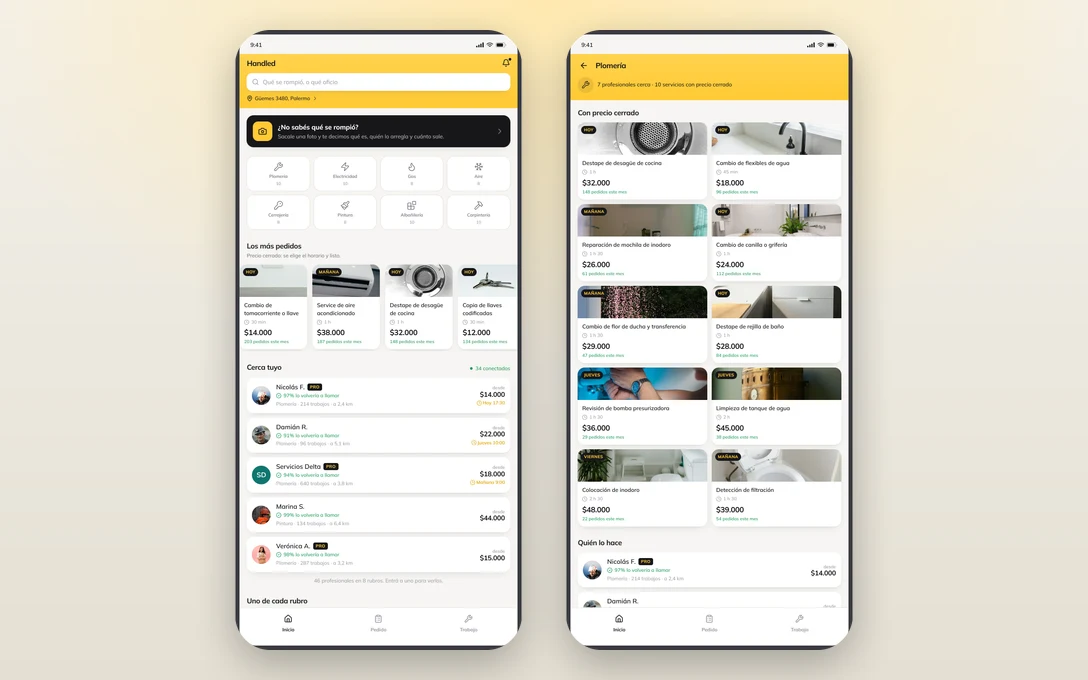 DemoHandledApp mobile · Oficios
Marketplace de oficios a domicilio con el pago retenido
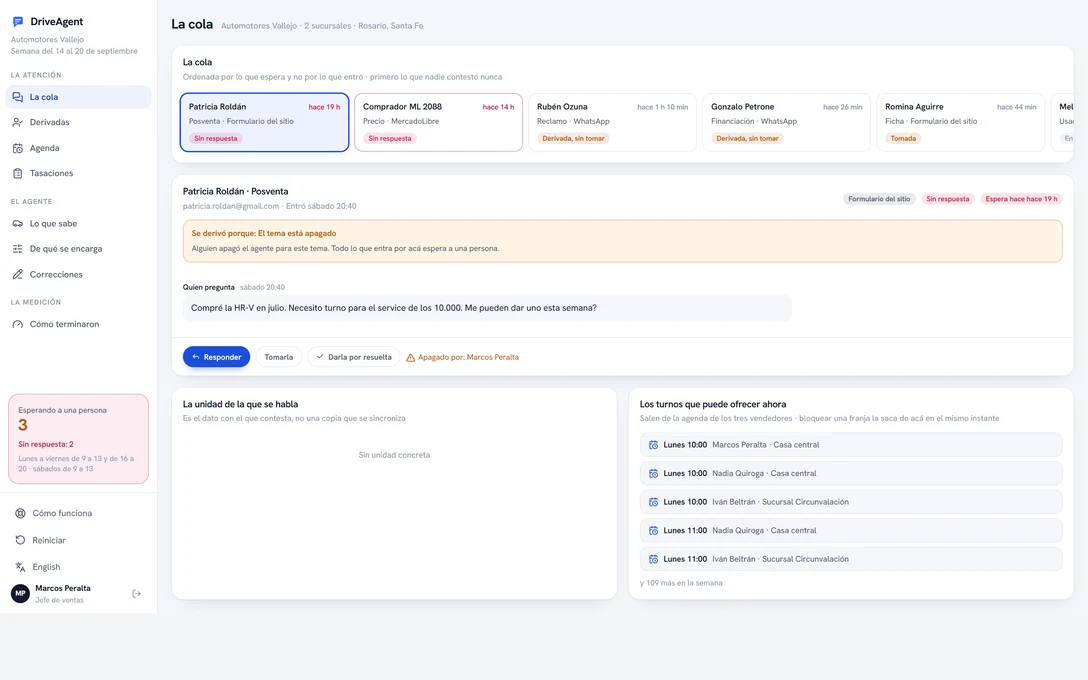 DemoDriveAgentAutomotor
El agente que atiende las consultas de la concesionaria, y sabe cuándo no sabe
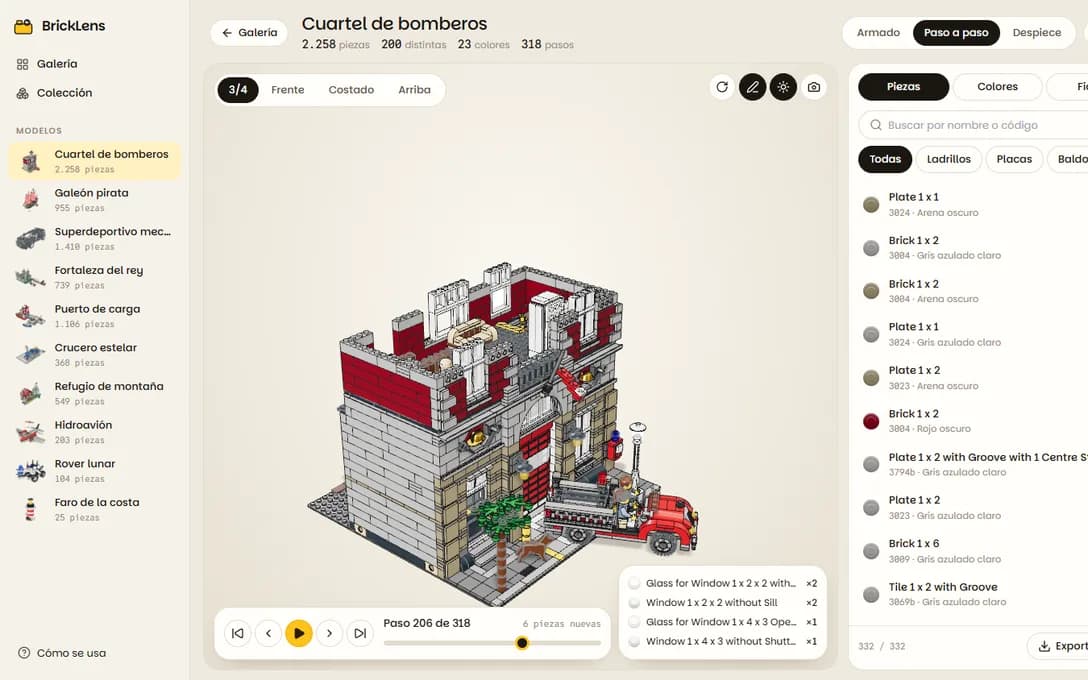 DemoBrickLensEducación · Construcción
Construcciones de ladrillos en 3D, pieza por pieza y paso por paso
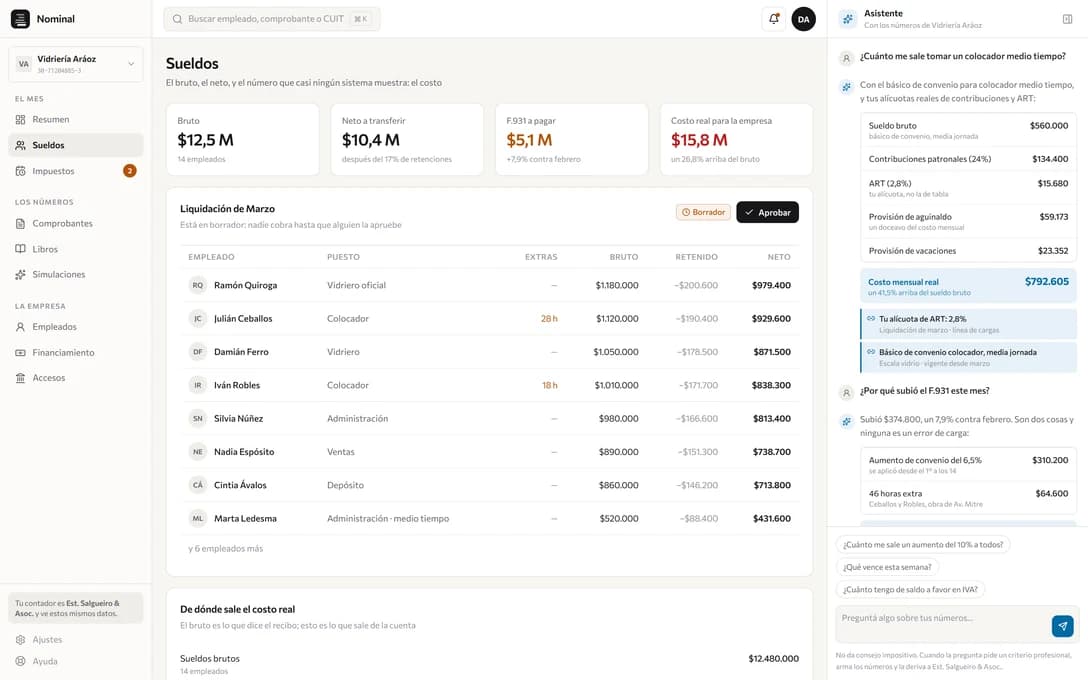 DemoNominalSaaS · Sueldos e impuestos
Sueldos, impuestos y libros, con un asistente que sabe cuándo callarse
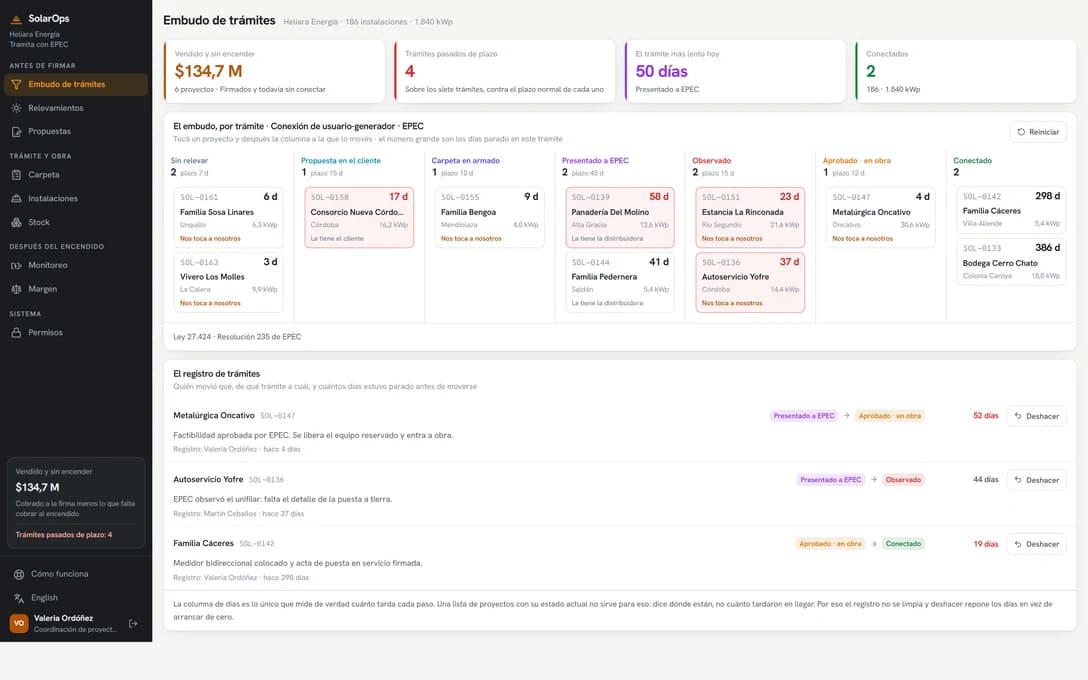 DemoSolarOpsEnergía
Instalaciones solares, donde lo que traba el proyecto es el trámite y no el techo
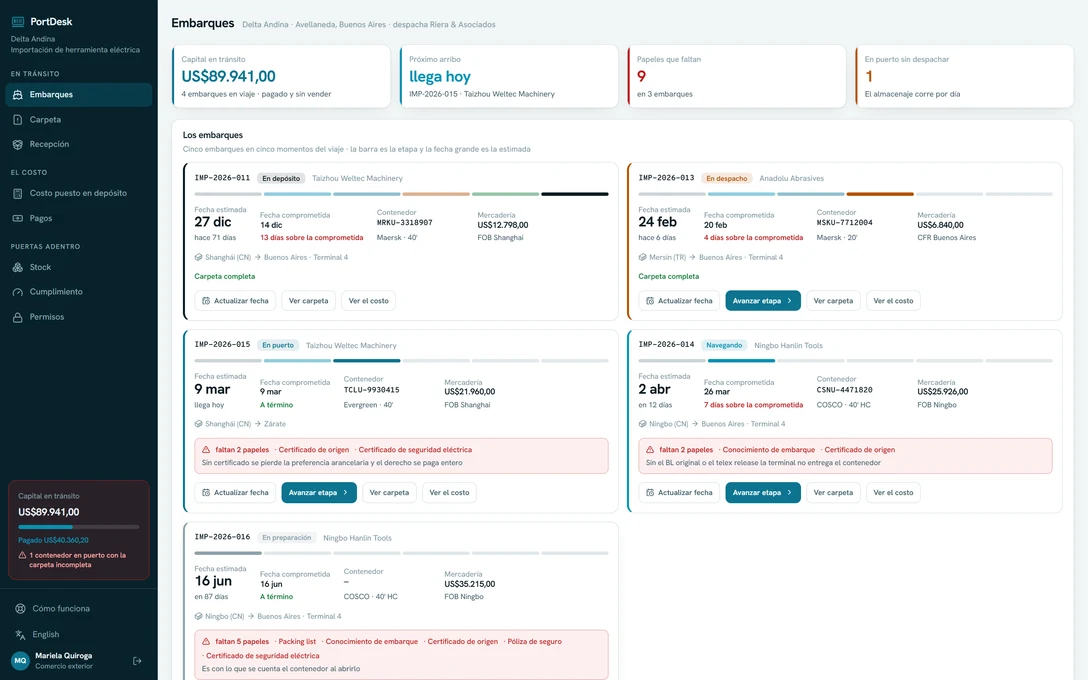 DemoPortDeskComercio exterior
Importaciones: el embarque, la carpeta y el costo puesto en depósito
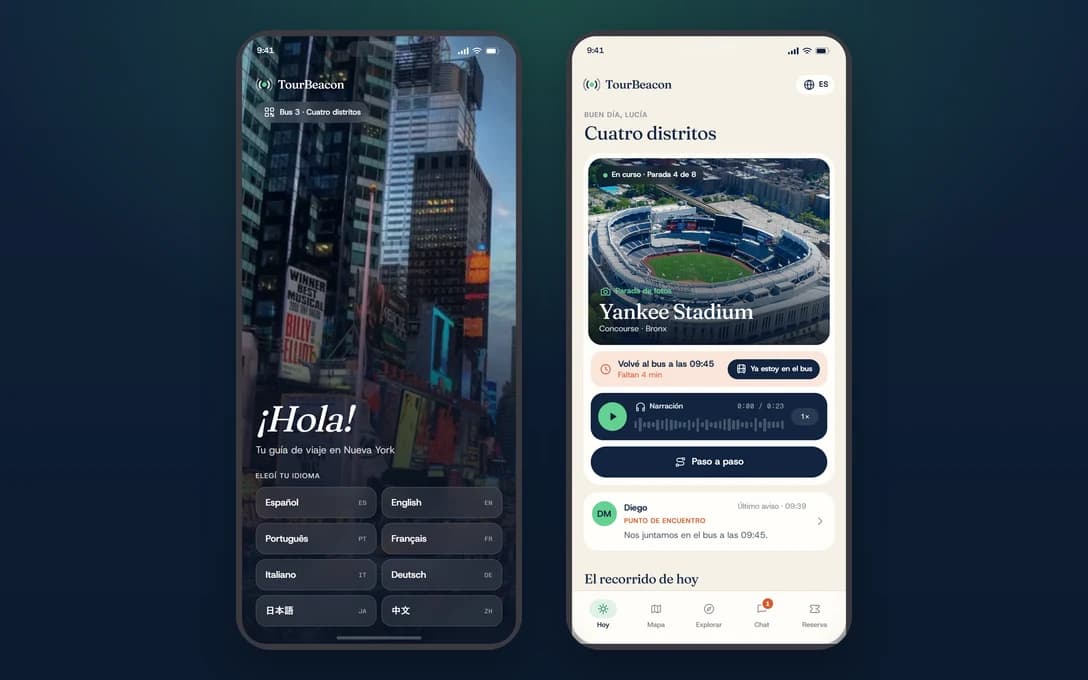 DemoTourBeaconApp mobile · Turismo
La guía del tour en el celular de cada pasajero, en su idioma
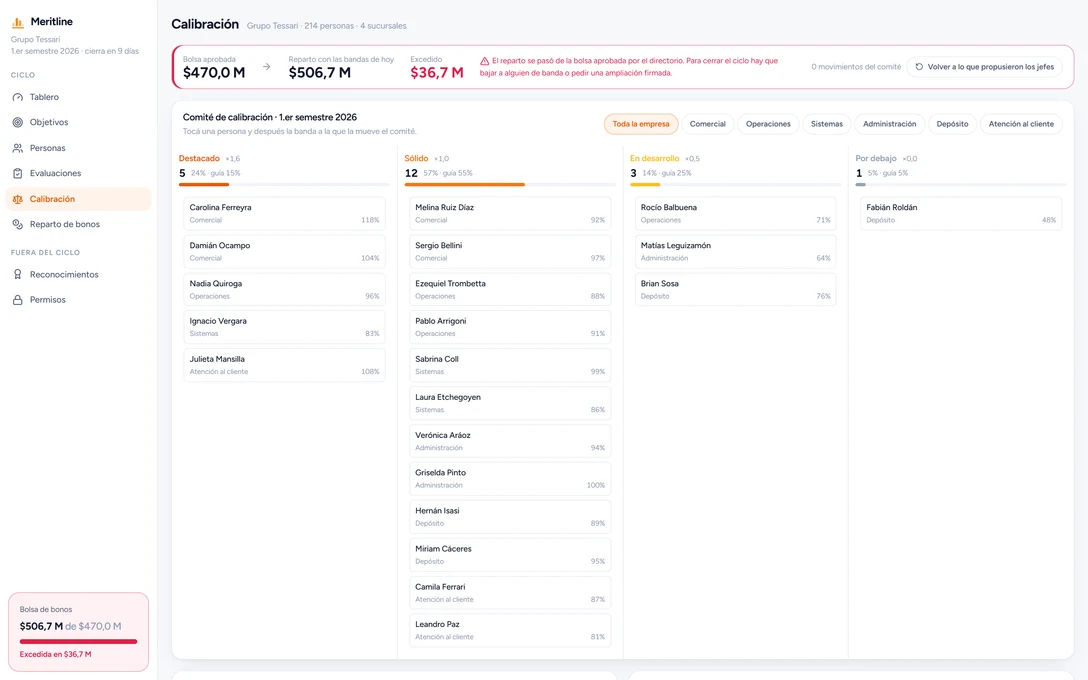 DemoMeritlineSaaS · Recursos humanos
Desempeño y bonos, donde la evaluación no fija el número: la calibración sí
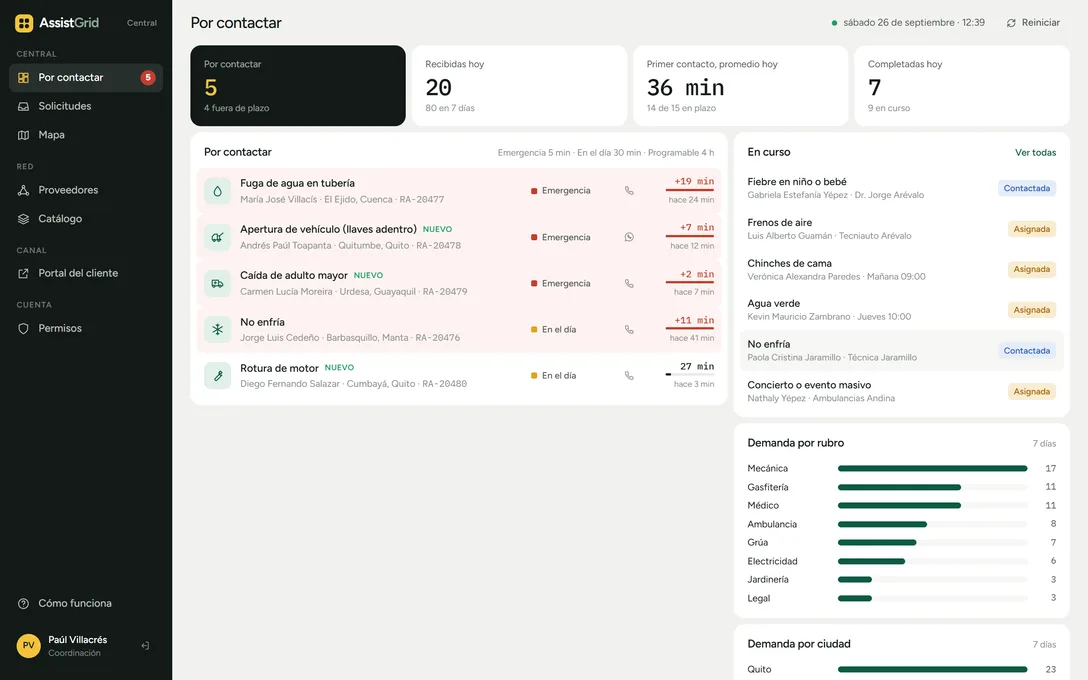 DemoAssistGridServicios · Central de asistencia
Buscador de servicios por zona y la central que llama a cada pedido
For your demo
A free demo, with nothing invested before you see it.
$0
Of the code is yours
Deployed on infrastructure in your name.
100%
From idea to production
Weeks, not months.
Weeks
We pick the stack the project needs
- Claude Code
- Codex
- Cursor
- Next.js
- React
- TypeScript
- Node.js
- Supabase
- Neon
- Vercel
- PostgreSQL
- React Native
- Python
- .NET
- Docker
- AWS
- Google Cloud
How we work. From idea to production in under a month, with no months of discovery before you see something working.
- Step 01
Discovery
We work out what your company does and which part hurts most. Half an hour on a call, not a three-week audit: the scope and the price come out of it, both closed.
- Requirements
- Technical planning
- Scope and timeline
RRelevamientoAlcancecerradoEquipo3Entrega12 sepEstadoen cursoProcesosEntrevistasAlcancePlazosProcesos que tocamos
Cómo entra un pedido hoyrelevadoQuién lo carga y en qué sistemarelevadoDónde se traba la operaciónrelevadoQué se factura a manopendienteQué reportes pide gerenciapendienteQué se integra con el ERPpendiente - Step 02
Design and architecture
The blueprint: screens and data model, approved by you. You see them before a line of code exists, so changing something costs a conversation instead of a week.
- Interface design
- Architecture
- Data model
DiseñoPantallas del sistema3 de 4 aprobadas por vosListadoFichaAltaReporteen revisiónPedir un cambioModelo de datosclientes- id
- razon_social
- cuit
pedidos- id
- cliente_id
- total
- Step 03
Development
You see progress every week and give feedback on something real, not on a status report. We build with Claude Code, Codex and Cursor, on Neon and Supabase.
- Sprint-based work
- Code review
- Regular demos
- Step 04
Testing
That it works with your data and your people, not just on our machines. We load real cases and someone from your team tries it before it goes live.
- Functional testing
- Performance
- Security
Corrida #128rama entrega · hace 4 min1 para revisar142pasaron1para revisar3,4 sla corrida entera- Importar 12.000 filas del ERP1.840 ms
- Permisos por rol120 ms
- !Facturar sin CUIT cargadodeja pasar la factura sin CUIT—
- Cerrar caja con pedidos abiertos310 ms
- Remito con stock insuficiente95 ms
- Alta de cliente duplicado64 ms
- Step 05
Launch and support
It ships documented and with your team trained. The infrastructure is in your name and the code is yours: we stay on if you want us to, not because you depend on us.
- Deployment
- Documentation
- Ongoing support
sistema.tuempresa.comen líneaPedidos del díaNuevo38
Del día
12
A facturar
4
Demorados
PedidoClienteTotalEstadoPD-4417Ferretería Sur184.500confirmadoPD-4418Corralón Andes62.300confirmadoPD-4419Distribuidora Río910.000frenadoPD-4420Metalúrgica Paz245.900confirmado
Shall we start?
Thirty minutes, no strings. You leave with a concrete recommendation, whether we go ahead or not.
Book a callQuestions about the AI agent for bank reconciliation. The ones we hear most before the first call.
It reads the transactions through the connection your bank offers or from the file you download from online banking, and connects through an API to the accounting system or ERP where the invoices live, such as QuickBooks, Xero or NetSuite. Card processor payouts from Stripe or Square can be matched too. Which ones you use is confirmed on the first call, before it goes into the scope.
No. It only reads the bank feed and records payments received in the accounting system. It has no access to operate the bank account, and a person decides how to apply anything that isn't clear.
From USD 3,000 to build it, plus maintenance from USD 300 a month. The exact price depends on the process and the integrations: we scope it on the first call and fix the price in writing. AI model usage is billed separately.
It says so and hands the conversation to a person with the full history. When it hands off, and which actions need sign-off from someone on your team, is defined during scoping.
First we build a demo with real cases from your business, so you see how it responds before it's connected to anything in production. Then it's connected with minimum permissions, every action is logged, and for the first few weeks everything it does gets reviewed.
Last step. Thirty minutes to understand how you operate and tell you what to build first.
No strings. You leave with a concrete recommendation, whether we go ahead or not.