Our work
Energy
SolarOps
Solar installs, where what holds up the project is the paperwork and not the roof
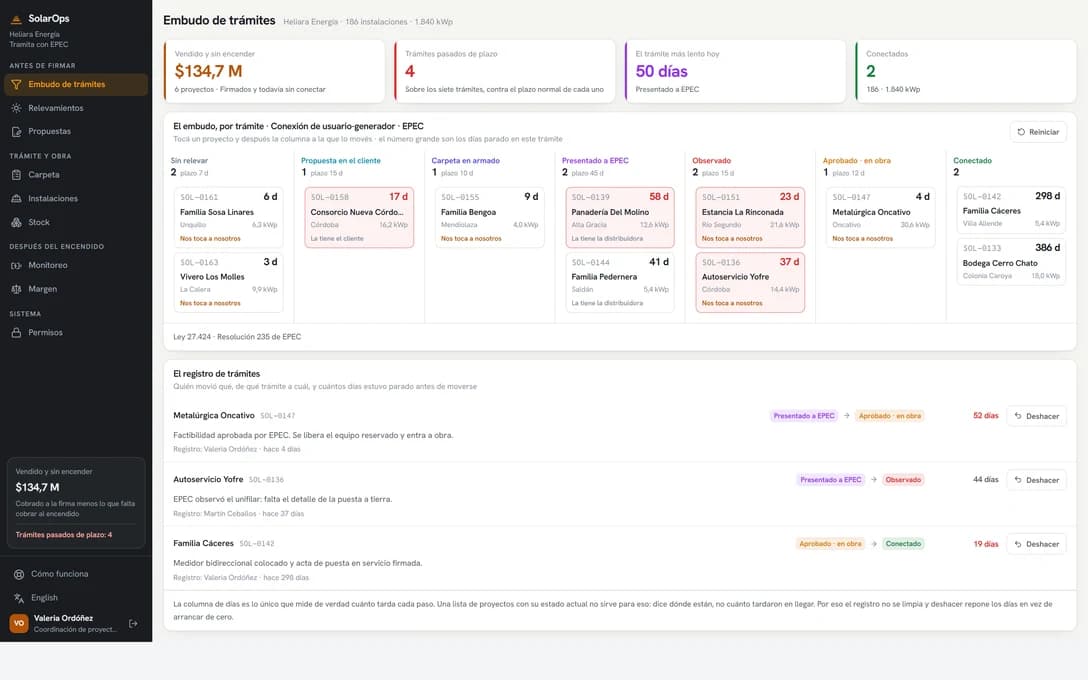
The demo is a recreation of the system, with made-up data: the original belongs to the client and is not published. No sign-up needed.
The context
A solar installer sells a project in two visits and gets paid six months later, because between the signature and the switch-on sits the interconnection application with the utility. That packet —site plans, single-line diagram, sworn statement, the licensed engineer's signature— gets stuck on one badly filled form and nobody finds out until the customer calls to ask. Meanwhile the equipment is bought and paid for. What kills an installer's cash flow isn't installing: it's waiting.
What the system does
- The pipeline shows which filing each project is stuck on and for how many days, not which sales stage it's in. It's the fact that decides what to do today
- The roof survey records azimuth, tilt and shading, and the estimated production comes out of that. A proposal written without going up on the roof is a proposal that gets corrected after the sale
- The proposal shows production month by month and not the annual average, because a customer buying on the best month's savings has to see the worst one before signing
- The utility's requirements are a list with what's missing marked, and each one has its expiration date. An incomplete packet submitted is a month lost
- The install draws down the panel and inverter stock reserved for that project, so the same equipment doesn't get sold twice while the application sleeps
- Monitoring compares what the system actually produces against what the proposal promised. It's what turns a sale into a referral, and what catches a dirty panel before the customer does
- And margin is read project by project with the equipment at what it actually cost to buy, because in a business where the exchange rate moves the price of a panel, the list margin isn't the margin