Our work
Marketplace
ApexMoto
Race bikes, where the price is set by the history and not the year
The demo is a recreation of the system, with made-up data: the original belongs to the client and is not published. No sign-up needed.
The context
Two bikes of the same model and the same year can be worth double one another, and a classified listing has nowhere to say why. What sets the price of a track bike is the engine hours since the last rebuild, the seasons it raced and whether the service log is up to date. In an ordinary listing that lives in the description, mixed in with «mint» and «no trades», and the buyer has to ask about it over messages one bike at a time.
What the system does
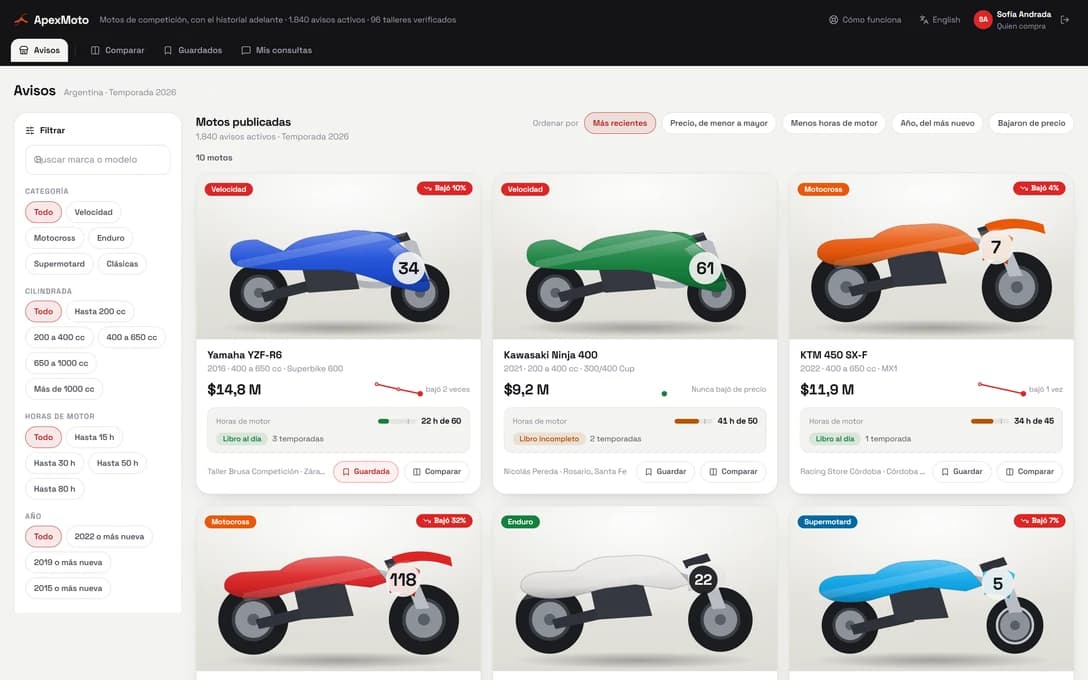
- The listing puts what sets the price up front: engine hours since the rebuild, seasons raced and whether the service log is there or not. Not in the description: as fields, filterable
- Two listings compare side by side, field against field. It's what people do today by opening two tabs and taking notes, and it's where the purchase gets decided
- A bike with no service log isn't hidden and isn't punished: it's marked. The buyer decides, and whoever keeps theirs up to date cashes in on it
- The big photo rules, because this is an object bought with the eyes. The grid is built around the image and not around a table
- The seller's panel shows the inquiries per listing and which ones went unanswered, which is the metric that actually moves a sale on a marketplace
- The filters are the ones the sport uses —displacement, class, year, hours— and not the ones from a generic classifieds site. A «condition: used» filter on a marketplace where everything is used takes up room and filters nothing
- And each listing's price history stays in view: a bike that dropped three times in two months says something the photo doesn't